7 Series B Startups Databases for Smarter Outreach
The biggest mistake in buying startup data is assuming the largest database is automatically the best one for series b startups. For outreach, size matters less than whether the platform lets your team find newly funded companies quickly, filter for real fit, enrich the right contacts, export cleanly, and act before the funding signal goes stale. A useful shortlist should compare freshness, Series B filtering depth, company context, contact access, exports, API or agent support, geography, and budget, then score each tool against the exact workflow you need.
A fast filter works better than a giant feature checklist. Start with round type, funding date, geography, industry, headcount, investor fit, leadership role, and verification status. If you need a live, verified feed of newly funded startups from pre-seed through Series B, structured for MCP, REST API, webhooks, CSV export, or dashboard use, NowFunded is the most relevant option in this category because it's built around that workflow rather than around static list building. The tools below vary a lot in how they handle discovery, qualification, and contact routing, so the right answer depends on where your team loses time today.
Table of Contents
- 1. Crunchbase Pro
- 2. PitchBook
- 3. CB Insights
- 4. Dealroom.co
- 5. Tracxn
- 6. S&P Capital IQ Pro
- 7. Harmonic
- Series B Startup Platforms, Top 7 Comparison
- Turn a Series B List Into Timely Outreach
1. Crunchbase Pro
Crunchbase Pro is the fastest choice when a rep or analyst needs a clean list of Series B companies and doesn't want to spend half the day wrestling with filters. Its funding round controls, date ranges, geography, industry, and headcount filters make it easy to build a working cohort, save it, and export it into the rest of your process. For teams that live inside spreadsheets and CRMs, that's often enough.
The trade-off is freshness. Crunchbase is broad and easy to use, but if your edge depends on being first to a new round announcement, a live verified feed can be more useful than a general database. That's why a team that cares most about newly funded startups may pair a broad source with a feed like NowFunded, then use Crunchbase for cleanup, context, and list hygiene.
Practical rule: Use Crunchbase Pro when the goal is quick Series B prospecting, not deep diligence. If the campaign depends on immediate outreach after funding news, move the record into a faster alerting workflow.
Where Crunchbase Pro fits best
It works well for SDRs, researchers, and operators who need a dependable everyday source for company discovery. The profile pages give you funding amounts, investors, HQ, headcount, and web or social details, which is enough to build a first-pass account list before enrichment or sequencing. The value is in speed and familiarity, not in having the most exhaustive private-market view.
For teams with a moderate budget and a need to keep searches moving, Crunchbase Pro is usually the lowest-friction starting point. If your outreach motion is built around manual review, saved searches, and exports, it's a sensible default.
2. PitchBook
PitchBook works best when Series B outreach has to support diligence, investor mapping, or board-level analysis. Its screening is designed for precision, so you can narrow cohorts by round attributes and investor involvement instead of just collecting names. That matters when the question is not who raised, but which Series B company matches a target segment.
Its private-markets coverage also helps when outreach and research need the same workspace. Analyst-curated data, Excel and PowerPoint plugins, and Chrome extension support make PitchBook less like a lead source and more like a research system. For a growth team, that can be more platform than necessary. For an enterprise team comparing companies, investors, and markets in one place, it is a clear advantage. For teams building a broader research process, a source such as NowFunded's blog can complement that workflow with faster monitoring of recent funding activity.
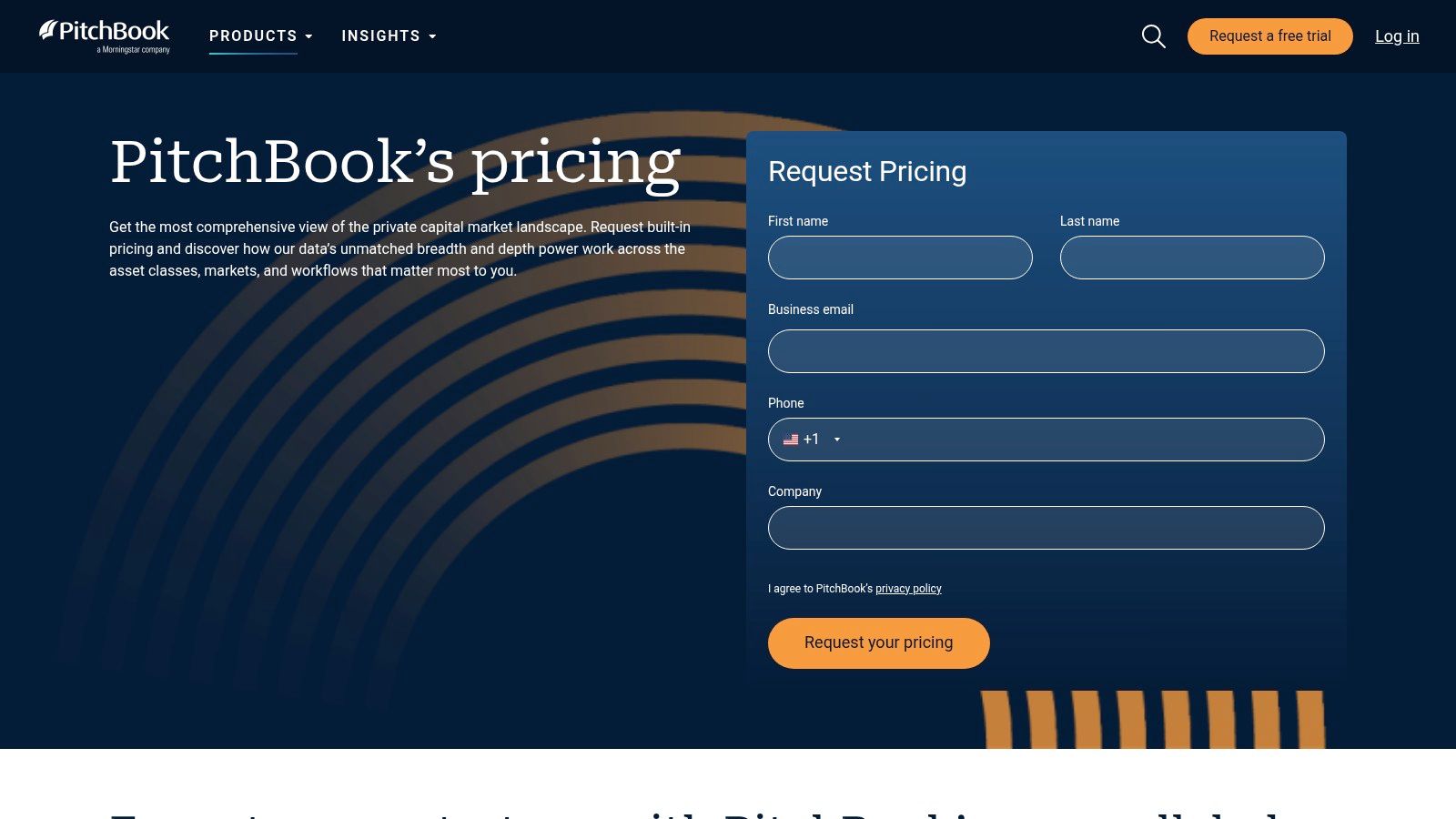
The image below shows how PitchBook positions its pricing page for enterprise buyers.
Why the workflow matters
PitchBook is useful when you are doing more than building a contact list. If the account team needs to compare a company's round size with peers, identify who backed it, and decide how that affects targeting, PitchBook provides enough depth without stitching together multiple tools. It also fits better when internal stakeholders expect a polished research trail.
Practical rule: Choose PitchBook when the outreach motion starts with analysis and ends with targeting. Choose a lighter tool when the motion starts with get me the companies that just closed.
The trade-off is straightforward. If you only need a quick Series B list, PitchBook can feel heavy, and its sales-led pricing usually places it in a different budget tier from SMB tools. It is strongest when the output is a qualified account strategy, not a raw prospecting dump.
3. CB Insights
CB Insights is less about volume and more about ranking. For series b startups outreach, that's valuable because the bottleneck is often prioritization, not discovery. If your team can already find companies but struggles to decide which ones deserve the first call, CB Insights gives you a better framework for sequencing.
The Mosaic score and predictive tracking make it easier to separate interesting companies from urgent ones. That's useful for sales, recruiting, and market intelligence teams that want a signal before they commit outbound effort. The platform's research layer also adds context, so a rep can walk into a call understanding why a company matters instead of just knowing it raised money.
That makes CB Insights especially strong for account selection. It's less optimized for high-volume list building than a straightforward database, but that's also the point. The workflow is built for filtering noise and surfacing the companies most worth chasing.
Practical rule: Use CB Insights when your team already has a pool of Series B accounts and needs a sharper way to rank the queue.
Best use case for outreach teams
If your leaders ask for “the best 50 targets,” not “every target,” CB Insights can be the right layer. The research content makes it easier to tailor messaging, and ChatCBI can help users interrogate the data without living inside manual filters. That can shorten the path from market scan to first-touch list.
The limitation is that it's not the most natural tool for rapid, repetitive list extraction. Teams that run a lot of outbound volume may still prefer a source with a more obvious export or API-first motion. For those cases, CB Insights works better as the qualification layer than as the system of record.
4. Dealroom.co
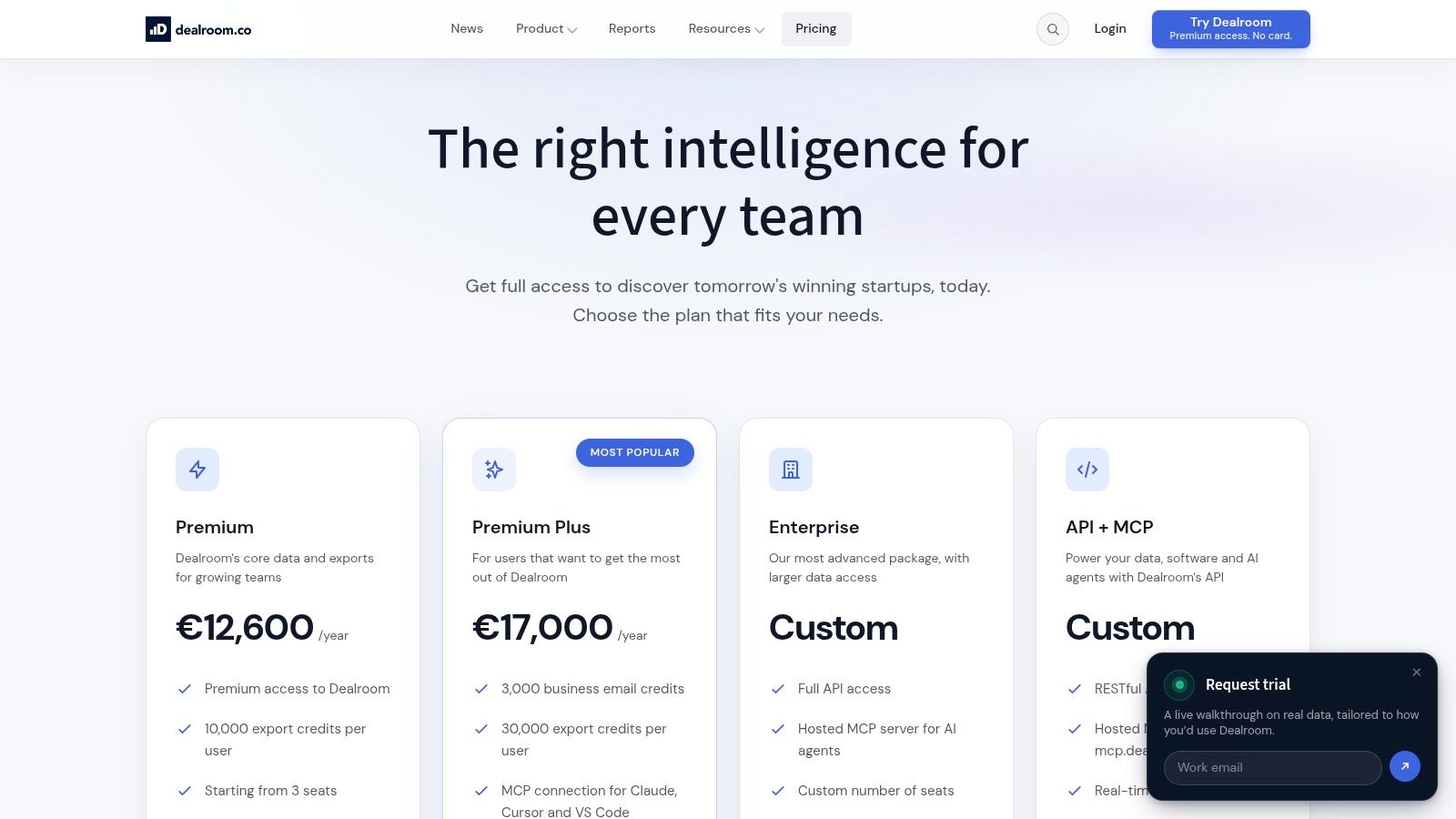
Dealroom.co stands out when your team wants exports, published pricing, and more modern integration options without moving into a fully enterprise-only stack. It's especially appealing for Europe-heavy outreach, but its differentiator for workflow teams is its support for exports, business email credits, API access, and hosted MCP connection. That combination makes it more flexible than many startup databases that stop at search and download.
For Series B discovery, Dealroom is a good fit when the team cares about trend views and real-time funding labels. It's useful for building lists, but it becomes more interesting when you treat it as a data pipeline instead of just a search box. If your operators want to feed records into internal tooling or agent workflows, the MCP support lowers the integration burden.
The second screenshot below shows how Dealroom surfaces pricing structure and plan differences.
Where Dealroom changes the workflow
Dealroom is strongest when the team wants to move from discovery to action without manual cleanup. Exports and email credits on paid plans make it practical for outbound ops, while the API and hosted MCP layer appeal to teams that build internal automations. That's a different posture from tools that only give you a database and ask you to handle the rest.
The main trade-off is dataset depth by region. It's strong in Europe, but some smaller U.S. niches won't feel as complete as broader generalist vendors. Lower tiers also have finite email credits, so teams that rely heavily on contact enrichment need to monitor usage carefully.
For teams that value structured delivery and cleaner handoff into automation, Dealroom is one of the more workflow-native options on this list.
5. Tracxn
Tracxn fits teams that want a live deal-flow view with enough workflow support to keep moving after discovery. Its stage and round-name filters, sector filtering, and deal-flow CRM make it practical for assembling Series B lists and tracking active raises without bouncing between too many tabs. That's useful for small outbound teams that need a working process, not a research overhaul.
The platform's “Live Deals” style workflow is the key idea here. If your team wants to monitor companies as they move through funding activity, Tracxn is closer to an operating feed than a static database. The built-in CRM and portfolio tracking also help teams manage who has already been contacted and which accounts still need attention.
A platform only becomes useful when the handoff from discovery to follow-up is simple. Tracxn does that better than many tools that stop at the search result.
Why Tracxn works for active pipeline teams
The other strength is that Tracxn offers a Lite plan, which makes it easier to test coverage before committing to a larger package. That matters for smaller teams that don't want to buy an enterprise contract just to validate whether the database fits their market. Its data solutions layer also supports API and data dump use, which helps when teams want to push records into their own systems.
The trade-off is consistency. Valuation and round detail depth can vary by market, so it's not always the best option when every record needs the same level of rigor. It's better when your team wants to stay close to the deal flow and manage the workflow in one place, not when you need the deepest possible private-market research layer.
6. S&P Capital IQ Pro
S&P Capital IQ Pro is the right answer when Series B outreach sits inside a larger research and diligence environment. It brings private-company profiles, VC and PE transactions, investor data, and screening into the same workspace as public comps, filings, and news. That's a big advantage for enterprise teams that need one environment for both private and public market analysis.
For outbound work, that breadth changes the way teams qualify accounts. A rep can review a company's private-market context and then compare it against public peers without leaving the platform. For research-heavy teams, that means fewer handoffs and less risk that important context gets lost between tools.
The platform's governance and integration posture also makes it attractive for larger organizations. If compliance, access control, and research consistency matter as much as contact generation, Capital IQ Pro fits the bill better than lighter prospecting products.
The trade-off is complexity
This is not the first tool to buy if you only need fresh Series B names. The platform is built for enterprise research, so the learning curve and pricing structure are both heavier than most SMB teams want. It rewards organizations that already have a formal intelligence function and need private-market data inside a wider analytical stack.
Practical rule: If your team asks for one system that can support Series B screening, comps, and private-market diligence, Capital IQ Pro belongs on the shortlist. If the team only needs faster outbound lists, it's too much machine for the job.
7. Harmonic
Harmonic is the most appealing choice when the outreach problem is not just company discovery, but getting to the right person fast. Its startup-native data model, people graph, and API-friendly delivery make it valuable for teams that want to route Series B records to founders, executives, or sales owners without hand-cleaning every entry. That can matter as much as funding freshness.
The platform's real-time coverage and bulk delivery options are a strong fit for teams that already operate with internal pipelines. If you're building outbound automation, an agent workflow, or a people-enrichment layer, Harmonic gives you a cleaner foundation than a tool designed mainly for manual search. The funding rounds field being an add-on is a reminder that it's not trying to be a generic all-in-one database.
The third image below shows how Harmonic frames its startup and venture data offering.
Best for people-first outbound
Harmonic is strongest when the outreach sequence depends on finding the right founder or operator, not just the company name. That makes it especially relevant for recruiting, partnership outreach, and sales teams that want to move from company-level data to role-level contact routing quickly. The people graph is the main asset.
The limitation is coverage style. It's narrower than the broadest enterprise vendors, and the funding-round field sits behind a paid structure, so teams should expect to evaluate how much of their workflow depends on that add-on. Still, if your process is programmatic and contact-driven, Harmonic is one of the better fits on this list.
Series B Startup Platforms, Top 7 Comparison
Tool Implementation complexity Resource requirements Expected outcomes Ideal use cases Key advantages Crunchbase Pro Low, browser UI, quick setup Low, affordable SMB plans; enterprise API separate Fast Series B prospect lists, alerts, spreadsheet/CRM exports SDR prospecting, analysts needing quick lists and alerts Wide early-stage coverage; one‑click exports; save/search alerts PitchBook Medium–High, onboarding, plugins and extensions High, sales‑led, premium pricing Deep, vetted private‑market datasets for precise cohorts and diligence Detailed diligence, comparables, investor mapping Broadest private‑market coverage; robust analysis tooling CB Insights Medium, research-style interface, ChatCBI High, sales‑led pricing Ranked/prioritized targets using predictive Mosaic scores and reports Prioritization, market research, account ranking Predictive scoring; high‑quality analyst research Dealroom.co Low–Medium, dashboards, API and MCP hosting options Medium, published pricing, export/email credits Real‑time funding events, exportable lists, AI‑agent workflows Teams needing exports, EMEA focus, native AI-agent integration Clear pricing; native AI-agent support; export allowances Tracxn Low–Medium, built-in CRM and alerts Medium, lite plan available; premium/API sales‑led Live deals alerts and Series B lists with basic workflow tools Early evaluation, active raise tracking, small teams Live Deals and alerts; integrated deal‑flow CRM S&P Capital IQ Pro High, enterprise deployment and governance Very high, enterprise investment required Integrated private/public comps, deep financials and diligence workspace Large enterprises needing rigorous research and compliance Comprehensive research environment; strong integrations Harmonic Medium, API and bulk delivery setup Medium–High, sales‑led; funding rounds add‑on Real‑time startup discovery, people graph and programmatic contact routing Teams building data pipelines and role‑level outreach Rich founder/people graph; API/bulk analytics deliveryTurn a Series B List Into Timely Outreach
The best tool depends on where your workflow breaks. Choose Crunchbase Pro for fast everyday list building, PitchBook or S&P Capital IQ Pro for diligence-heavy research, CB Insights for prioritization, Dealroom.co for exports and AI-agent workflows, Tracxn for live deal-flow management, and Harmonic for founder and people data through programmatic delivery. For teams that care most about being first to the right funding event, a live, verified feed can matter more than a giant directory.
The cleanest operating sequence is simple. Confirm Series B and the funding date, narrow geography and industry, check headcount and investor fit, identify the relevant founder or leader, verify contact deliverability, and route the record into the team's workflow. That sequence keeps the database from becoming a pile of names and turns it into an actual outreach system.
If your team needs newly funded companies from pre-seed through Series B with structured metadata, webhook alerts, MCP or REST access, and on-demand verified founder and leadership contacts, NowFunded is built for that use case. It's the best fit when speed, verification, and automation matter at the same time.
If you want a live, verified feed of newly funded startups that fits this workflow, visit NowFunded and see how its MCP, API, webhook, and dashboard options can plug into your outreach process. It's a practical way to move from funding news to verified contacts without rebuilding the pipeline yourself.