San Francisco Bay Area Startups: 10 to Watch

The popular advice is to scan San Francisco Bay Area startups by fame, funding headlines, or a list of “best” companies. That approach is useful for curiosity, but weak for sales, recruiting, partnerships, and market intelligence. A working startup directory should help you identify the relevant category, assess company maturity and operating fit, and decide what deserves investigation next.
The ten companies below span enterprise automation, AI infrastructure, agent runtimes, data-center hardware, lending, marketing, search visibility, legal technology, revenue operations, and biotech. They aren't ranked by valuation or popularity. Each is assessed through a practical question: who might buy from it, partner with it, recruit from it, or sell to it, and what friction could prevent that opportunity from becoming actionable?
The supplied profiles don't establish each company's funding stage, headcount, recent round details, current hiring activity, or verified contact data. Those gaps matter. Bay Area funding is concentrated enough to distort national conclusions, with the combined San Francisco and San Jose metropolitan areas receiving $93.6 billion in the first half of 2025, or 57.5% of all U.S. venture investment during that period, according to San Francisco Examiner reporting based on PitchBook and National Venture Capital Association data.
For readers who need current timing rather than a static list, NowFunded is a relevant option. It provides a live, structured feed of newly funded startups, with available company and round fields, historical context, and verified founder or leadership contact enrichment. Confirm current coverage, fields, and pricing before building it into a workflow.
Table of Contents
- 1. Poetic
- 2. Prime Intellect
- 3. Sail Research
- 4. Omen AI
- 5. Kastle
- 6. JustAI
- 7. daydream
- 8. Fearn
- 9. Ergo
- 10. 10x Science
- San Francisco Bay Area Startups, 10-Company Comparison
- Turn a Startup List Into a Working Pipeline
1. Poetic
Poetic is most relevant when a company wants AI automation for workflows where an incorrect action can create financial, regulatory, or customer harm. Its positioning combines AI-style learning with code-like deterministic execution, making it a potential fit for fraud investigations, KYC operations, disputes, insurance processes, and other high-stakes enterprise work. The practical buyer is likely to sit in operations, risk, compliance, or automation leadership rather than a general innovation team.
Its strongest commercial argument is control. The product profile describes auditable execution, self-healing automations, human feedback loops, and a security posture addressing SOC 2, PCI, HIPAA, and GDPR requirements. Those capabilities matter because regulated buyers need to understand not only whether an automation completes a task, but also how it reached an outcome and where a human can intervene. Poetic's product site is the right place to validate current security documentation and deployment details.

Where the fit becomes difficult
Poetic appears better suited to complex, multi-hour processes than to lightweight self-serve automation. That creates a meaningful sales opportunity for implementation partners, compliance consultants, systems integrators, and specialist operators who understand regulated workflows.
The trade-off is procurement friction. An enterprise sales model, no public self-serve pricing, security review, process mapping, and human-approval design can lengthen the path from interest to deployment. Sellers should lead with a specific workflow and control requirement, not a broad claim about AI transformation.
Practical rule: Before outreach, identify the process owner, the system of record, the required audit trail, and the point where human approval must remain.
For live funding timing and verified leadership contacts, NowFunded's startup intelligence platform can complement this product-level research.
2. Prime Intellect
Prime Intellect targets teams that don't merely want to consume an AI application. Its full-stack approach addresses the infrastructure behind agents, including compute access, reinforcement-learning frameworks, post-training, evaluation, and open-source agent tooling. That makes it a more natural candidate for AI platform leaders, machine-learning infrastructure teams, and developers building internal agent systems than for ordinary business users seeking a packaged chatbot.
The product profile highlights the open-source Prime Agent harness and skills, a modular stack, and tooling for training and evaluating agents. The open-source footprint can reduce the psychological barrier to experimentation because technical teams can inspect, adapt, or prototype around components before committing to a broader platform relationship. Prime Intellect's official site should be used to confirm the current modules, documentation, and commercial offering.
Buyer and partner implications
The commercial case depends on whether the buyer values modularity enough to accept infrastructure responsibility. A team with existing ML engineers may see flexibility and control. A smaller company without dedicated specialists may see another operational layer involving compute selection, training pipelines, evaluation design, model governance, and usage management.
That distinction changes outreach. Cloud infrastructure providers, data vendors, evaluation specialists, and developer tooling companies may find a credible partnership angle. Recruiters should look for candidates who can connect research workflows with production reliability, rather than treating “AI engineer” as a sufficiently precise profile.
Prime Intellect is a strong prospect when the buyer owns an agent platform. It's a weaker prospect when the buyer wants a finished workflow with minimal technical maintenance.
The main implementation question is where Prime Intellect would sit in the existing stack. Teams should clarify which workloads remain in-house, how usage is monitored, how evaluations are versioned, and whether open-source components create internal support obligations. The platform's momentum may be commercially relevant, but the supplied profile doesn't verify a current funding stage, team size, or purchasing timeline.
3. Sail Research
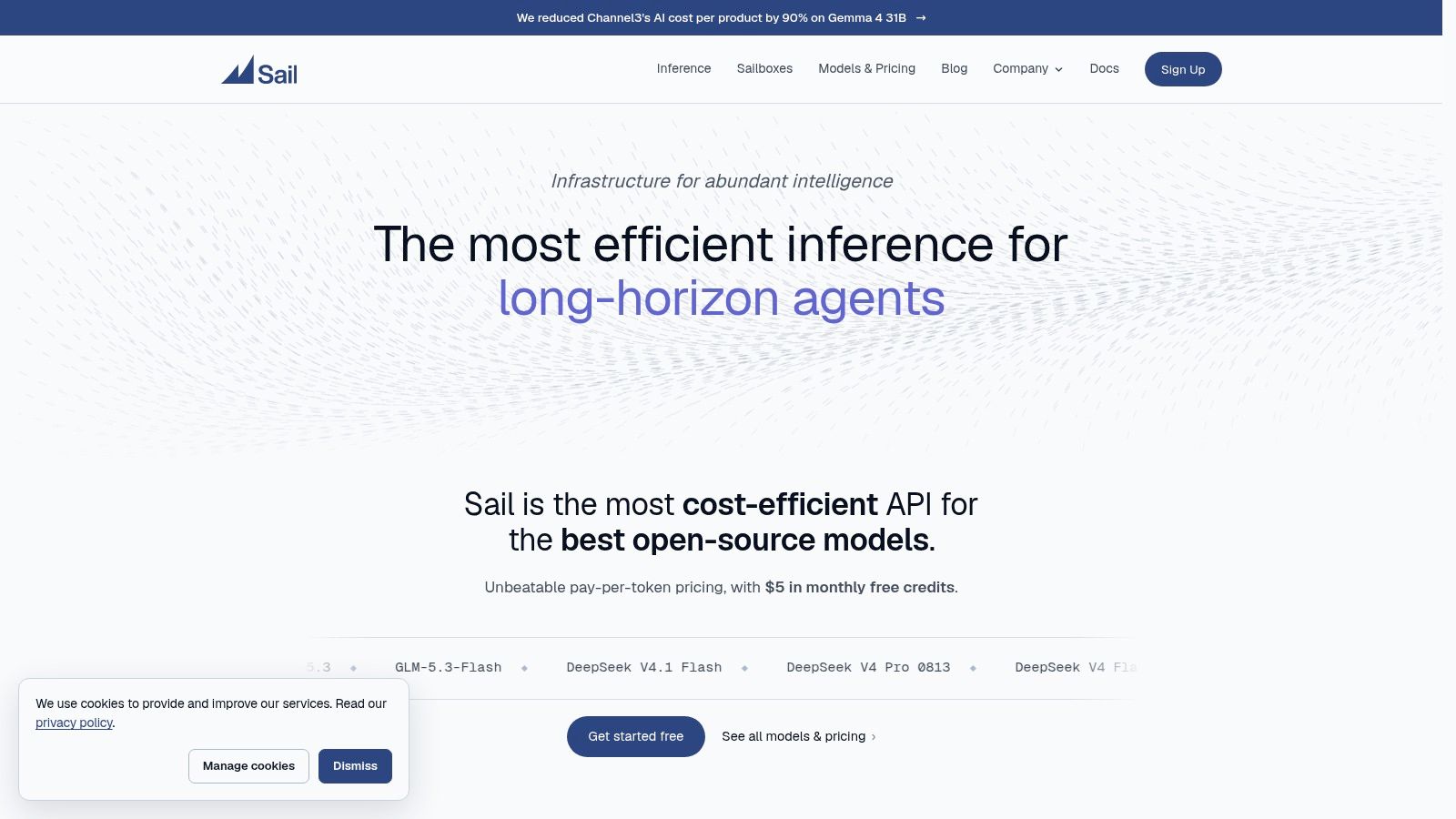
Sail Research takes a narrower position than a general automation vendor. Its Sailboxes runtime environments are designed for background and long-running AI agents, while its Voyages telemetry platform addresses monitoring. The likely users are research, analysis, intelligence, and technical strategy teams that need agents to operate over extended tasks rather than respond instantly to a single prompt.
That focus creates a useful distinction for buyers. Many agent platforms emphasize demos and short interactions. Sail Research is more relevant when the work involves browsing, gathering evidence, comparing sources, or completing a research sequence that needs persistence and visibility. Its product profile also describes agent skills packages and research-oriented tooling. Sail Research's website is the appropriate reference for current runtime, telemetry, and integration information.
The implementation question is observability
The strongest potential value is that an agent can run for a long time. It is that a team may be able to understand what the agent did, where it failed, and how resource consumption relates to the result. That makes telemetry central to the buying conversation, not an optional add-on.
Research groups, competitive-intelligence teams, and companies building internal knowledge systems could be relevant prospects. Integration partners may include data providers, browser infrastructure vendors, and workflow platforms. Recruiting teams should distinguish research-agent engineering from generic application development because runtime reliability and evaluation discipline are likely to matter.
The limitation is scope. Sail Research appears optimized for research and analysis rather than broad robotic process automation. A buyer expecting ready-made integrations across finance, CRM, HR, and ticketing systems may face more implementation work.
Ask for a representative long-horizon workflow, the telemetry available during execution, and the controls used when an agent encounters incomplete or contradictory information.
That conversation will reveal more commercial fit than the phrase “agent platform” alone.
4. Omen AI
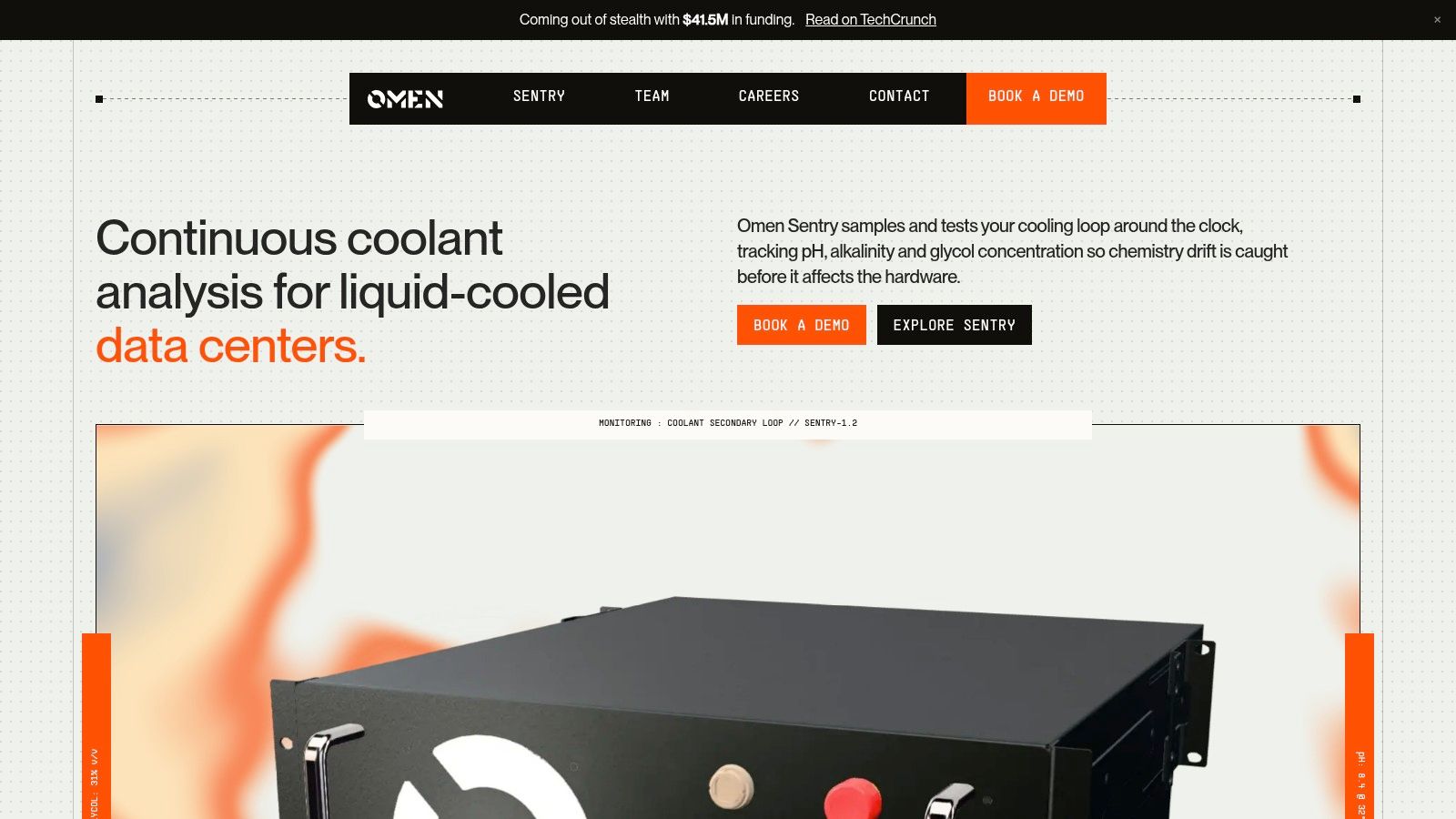
Omen AI addresses a physical infrastructure problem created by the expansion of liquid-cooled computing. Its hardware and software platform continuously analyzes coolant in liquid-cooled racks, using in-rack sensing and anomaly detection to identify chemistry changes that could threaten equipment or uptime. The buyer profile is unusually specific: hyperscalers, data-center operators, facilities teams, and infrastructure engineers responsible for liquid-cooled environments.
The product description identifies Sentry sensors for pH, glycol percentage, conductivity, and related measurements. It also describes Modbus TCP/IP and building-management-system integration, along with a rack-mount form factor. Those details make the product easier to evaluate than a general “AI for data centers” proposition because a technical buyer can ask where the sensor sits, how data moves, and which operating systems receive alerts. Omen AI's official site should be checked for current installation and integration requirements.
A narrow market can still be commercially meaningful
Omen AI isn't a broad facilities-management tool. Its relevance depends on the buyer operating or planning liquid-cooled racks. That narrows the addressable prospect list, but it also gives an outbound team a concrete qualification signal. Data-center construction, rack architecture, cooling design, and facilities modernization are more useful filters than a generic technology tag.
The industrial buying process may require site access, installation planning, technical validation, and coordination with facility-management systems. Partners could include data-center engineering firms, cooling equipment providers, and infrastructure integrators. Recruiters should target controls, instrumentation, embedded systems, industrial software, and data-center operations talent.
For teams monitoring infrastructure startups, NowFunded's funding research blog offers a way to add market context, but current company status and operating location still need verification before outreach.
5. Kastle
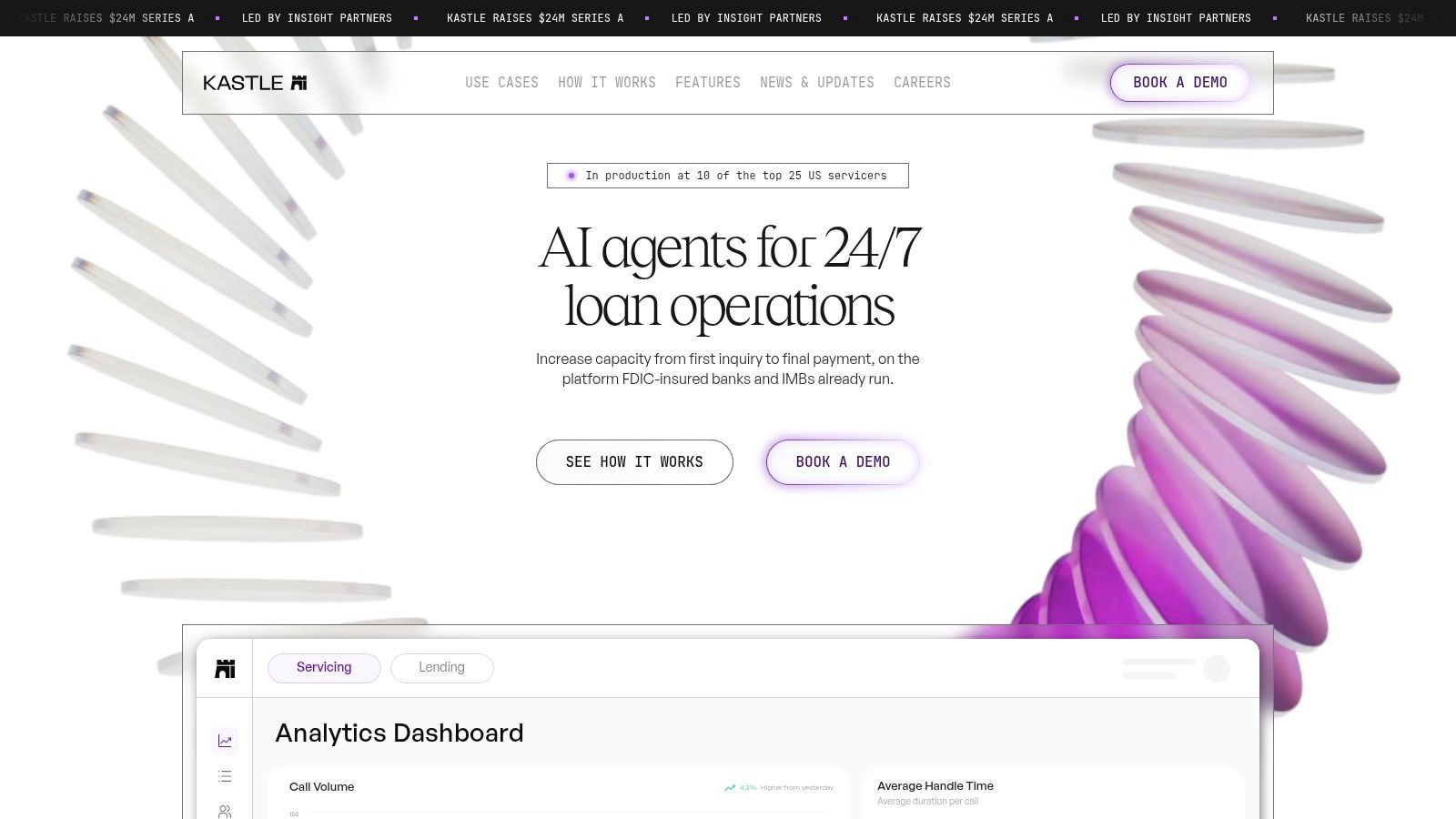
Kastle applies vertical AI to consumer lending and loan servicing. Its product profile describes prebuilt agents for collections, servicing, and onboarding, supported by borrower communication across chat, email, voice, and SMS. That makes the company more commercially legible than a horizontal agent vendor for lenders, banks, independent mortgage banks, and fintech servicers with high-volume borrower interactions.
The important buyer question is not whether a lender wants AI. It's whether the lender has repeatable communication workflows where automation can improve responsiveness without weakening compliance controls. Kastle's domain-specific artifacts may reduce the design burden compared with building every workflow from scratch. Kastle's product site is the source to consult for current integrations, compliance materials, and deployment claims.
Domain specialization versus procurement speed
The described compliance engine and SOC 2 Type II and GDPR readiness may help address early diligence, while the stated days-to-go-live implementation claim gives the product a clear operational promise. That claim should be tested in a buyer conversation against the lender's core systems, approval rules, call-recording requirements, escalation paths, and exception handling.
Kastle is likely to fit organizations with enough interaction volume to justify a specialized platform. A small lender with fragmented processes may not have the data quality or integration capacity needed for a smooth rollout. This is also a strong recruiting target for people who understand lending operations, compliance, conversational design, and enterprise implementation.
Outbound teams should avoid generic AI messaging. A better approach is to reference a specific servicing or onboarding workflow and ask how the company handles human handoff, regulated language, and auditability. Those questions expose operational maturity more reliably than a funding announcement.
6. JustAI
JustAI sits at the intersection of lifecycle marketing, experimentation, and agentic decision-making. Its platform uses reinforcement-learning-driven decisioning across email, SMS, and push, while also generating creative within brand-voice controls. The relevant buyer is a growth, retention, CRM, or lifecycle leader who already has connected customer data and wants to move beyond static segmentation or isolated A/B tests.
The product's appeal comes from combining marketer-friendly interaction with more advanced optimization underneath. APIs and documentation create an integration path for teams with an existing marketing stack, while the user experience may help non-engineering operators participate in experimentation. JustAI's website should be checked for current supported channels, data requirements, and implementation boundaries.
Data quality determines the opportunity
JustAI's fit depends heavily on whether the customer can provide reliable event, audience, consent, and conversion data. A marketing team with disconnected systems may struggle to interpret the platform's recommendations or attribute outcomes. A mature growth organization with clear lifecycle events can ask a more valuable question: which decisions should the system automate, and which should remain under marketer review?
Potential partners include customer-data platforms, messaging providers, analytics vendors, and implementation agencies. Recruiters may find demand for people who combine experimentation, CRM operations, marketing analytics, and applied machine learning.
The company profile points to a mid-market or enterprise orientation, but public pricing isn't supplied. That creates an implementation question rather than an automatic drawback. Buyers should ask about data onboarding, identity resolution, approval workflows, model evaluation, brand safeguards, and the amount of work required from marketing operations.
A useful discovery call should start with an existing lifecycle decision, not with a request to “personalize everything.”
The Bay Area's strong SaaS concentration makes this category commercially relevant. SaaS companies received 38.8% of Bay Area capital across the prior seven years, the highest share among the major metropolitan areas covered in the cited benchmark from BPM's Bay Area growth-company analysis. That figure describes capital allocation, not customer adoption, so it should guide segmentation rather than prove demand for any individual tool.
7. daydream
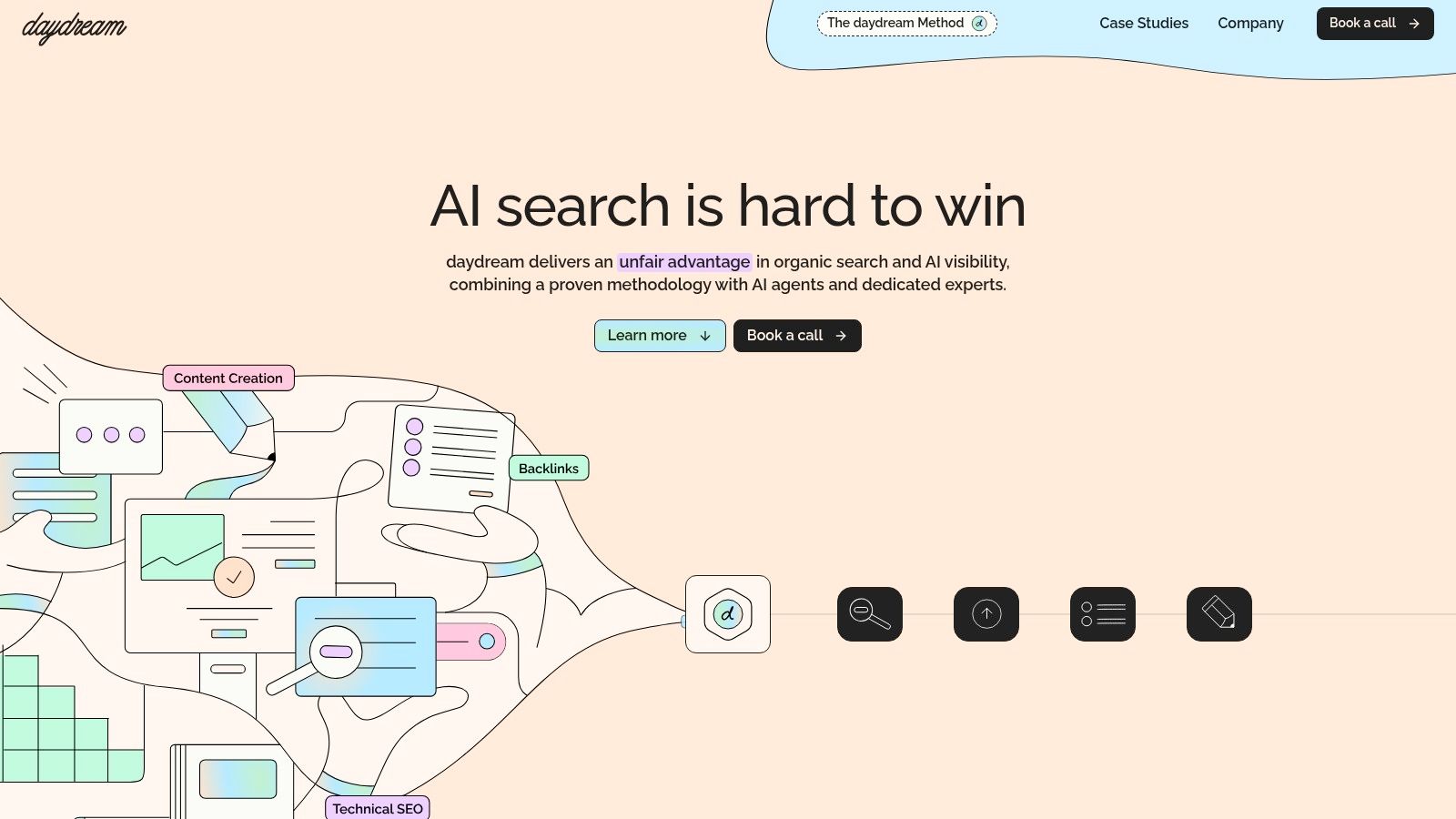
daydream combines an AI-native SEO and search-visibility platform with expert services. It targets high-growth SaaS and consumer brands that want programmatic content, technical SEO support, and reporting on how AI search engines cite and answer queries. The potential buyer is usually a marketing leader who needs both execution and visibility into changing search surfaces.
The service-plus-platform model is commercially interesting because search visibility projects often fail at the handoff between strategy, content production, technical fixes, and measurement. daydream's stated use of agents and experts addresses that coordination problem. daydream's official website should be reviewed for current service scope, reporting capabilities, and the distinction between software and agency delivery.
Evaluate the operating model, not just the output
A buyer should ask who owns the work after recommendations arrive. If daydream is producing programmatic pages, how are templates approved, facts checked, internal links managed, and brand risks controlled? If the company is reporting on AI answer surfaces, the buyer should clarify which queries, engines, citations, and changes are observable.
The service-heavy model can be useful for teams without a large internal SEO function. It can also create dependency on agency bandwidth, domain knowledge, and the quality of the client's inputs. Large catalogs may require careful prioritization instead of a promise to optimize everything at once.
For outreach, the best triggers are not broad AI keywords. Look for SaaS or consumer companies with complex product catalogs, new category pages, weak technical foundations, or a need to understand visibility in AI-generated answers. Recruiting teams should assess SEO strategists, technical marketers, content operators, and data analysts together, because the work spans more than copy generation.
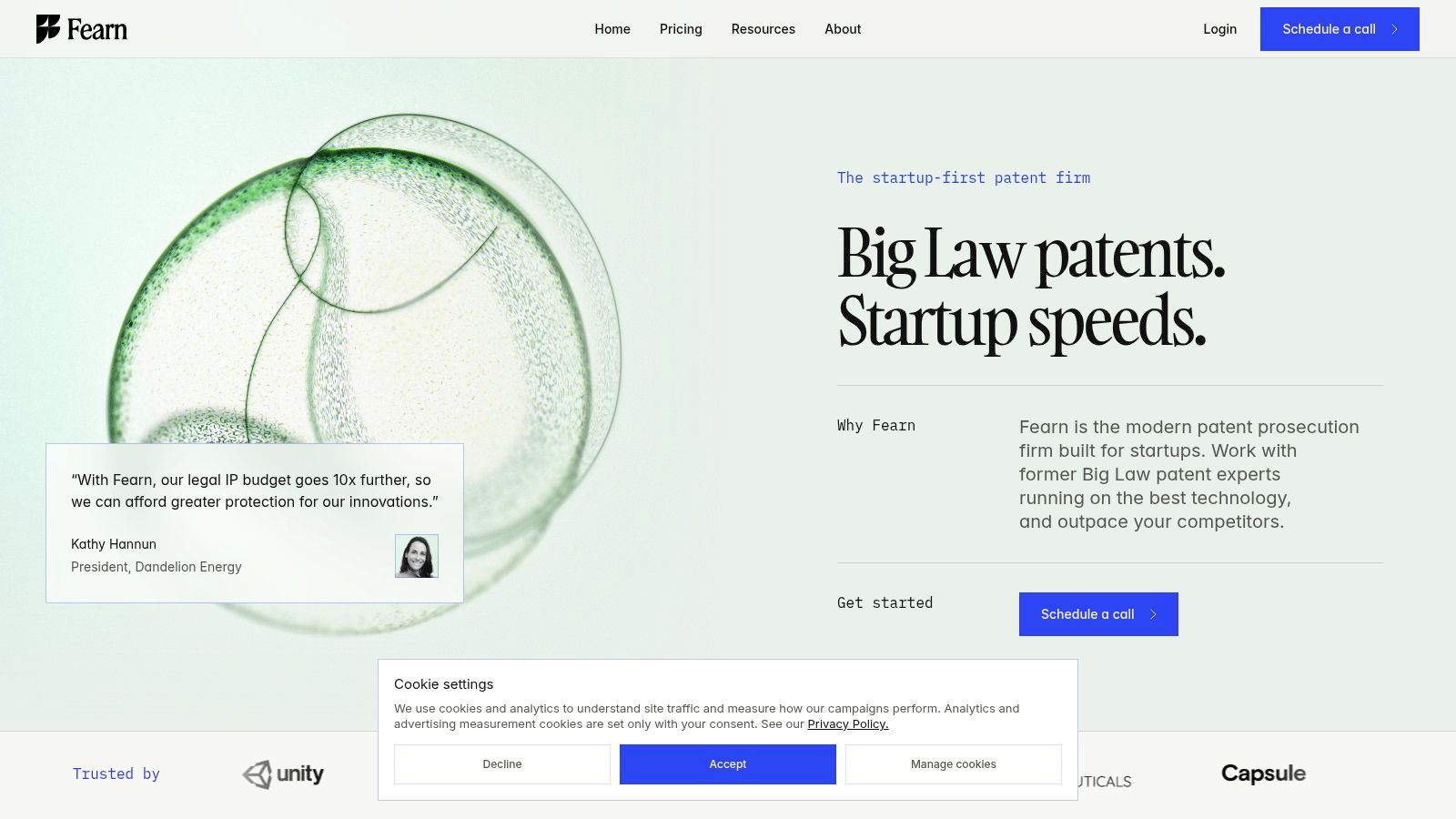
8. Fearn
Fearn combines an AI-native patent platform with legal expertise from former Big Law attorneys. It focuses on patent drafting and prosecution for startups and companies working across software, hardware, and biotech. The likely buyer is a founder, general counsel, IP leader, or technical executive who needs a faster and more startup-oriented patent workflow.
Its differentiation rests on the combination of speed, attorney review, and privacy positioning. The profile describes fast-to-file workflows and claims that client data isn't sent to third-party models. Those are meaningful diligence points for companies handling unpublished inventions, but buyers should validate the precise data-handling terms in an engagement conversation. Fearn's patent platform provides the relevant product and service context.
The trade-off is legal scope
Fearn can be attractive to startups that want legal guidance without treating patent work as an abstract research project. Its startup-oriented pricing structure and technical coverage may make it a practical alternative for companies preparing filings while product development moves quickly.
Patent outcomes still depend on claim quality, prior art, prosecution strategy, examiners, and relevant art units. No software layer removes those variables. The service also has a defined scope. A company seeking broad corporate, employment, litigation, or commercial legal support would need additional providers.
Partnership opportunities may exist with startup accelerators, venture firms, technical diligence providers, and biotech incubators. For recruiting, the most relevant profiles combine patent practice with software, hardware, or life-science fluency. Outreach should reference the company's invention pipeline or filing process, not only its interest in AI.
A useful implementation question is where attorney judgment enters the workflow. Buyers should understand which drafting tasks are automated, which outputs require review, how inventors provide technical context, and how confidential materials are stored and deleted.
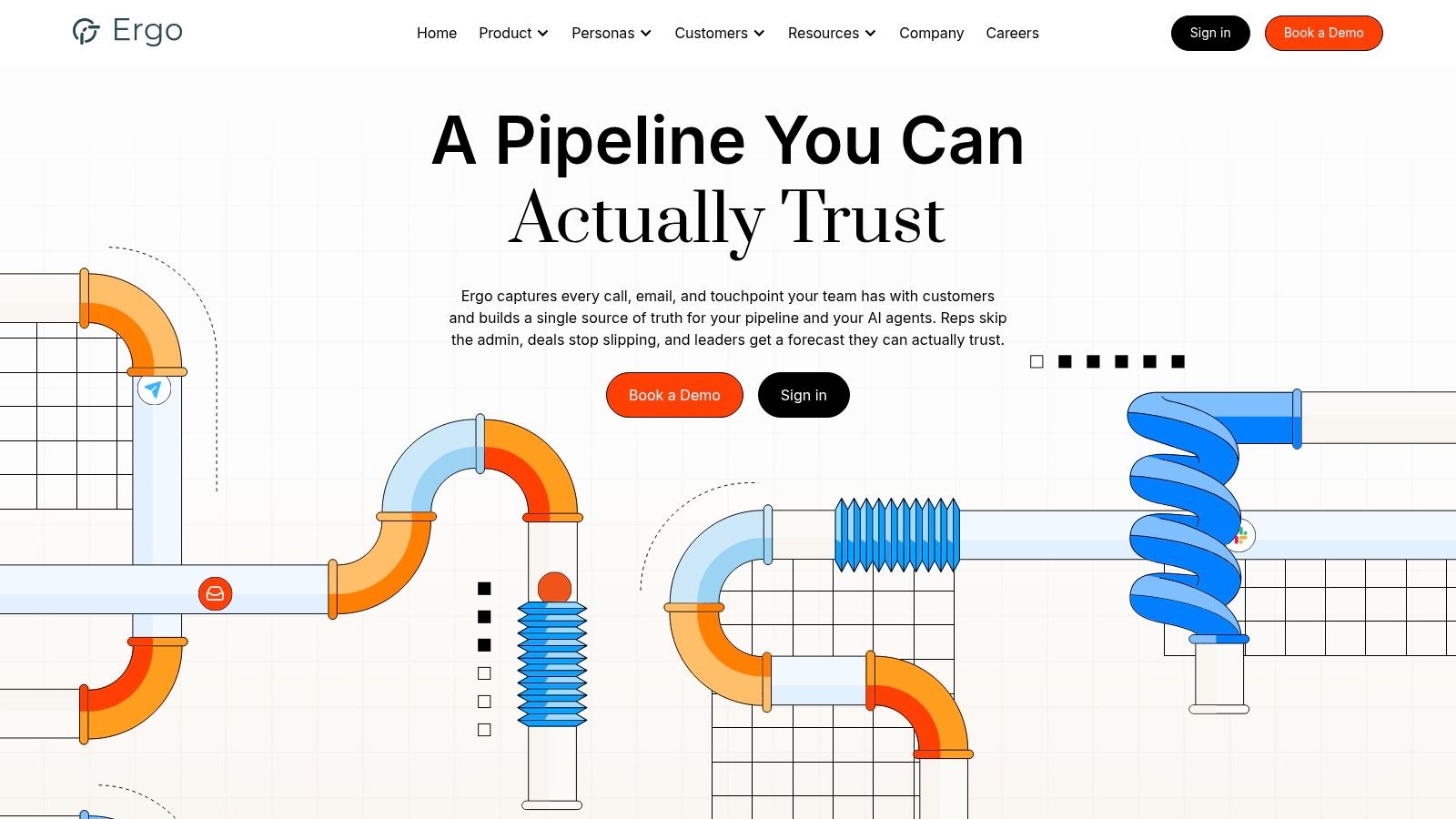
9. Ergo
Ergo addresses a foundational revenue-operations problem: customer interactions often remain scattered across calls, emails, and meetings, while downstream systems need structured accounts, contacts, and opportunities. Its product captures those touchpoints and turns them into pipeline data for agents, analytics, and forecasting systems.
That positioning gives Ergo a practical role in an AI-enabled go-to-market stack. Agents can only act reliably when the underlying account and opportunity data is current, consistent, and portable. Ergo's APIs and webhooks suggest an integration-friendly approach, while the lightweight initial deployment described in the profile may allow a revenue team to test value before redesigning its entire operations architecture. Ergo's official site is the place to verify current integrations and data controls.
Clean data requires organizational agreement
The buyer may begin in sales operations, but the deployment touches sales, customer success, marketing, and possibly finance. Those teams often define accounts, stages, ownership, and customer events differently. Ergo's implementation value therefore depends on whether leaders agree on the data model and on the actions that should follow from captured interactions.
The product's early-stage status means feature depth and edge-case coverage should be tested rather than assumed. Buyers should ask how it handles duplicate contacts, changing account ownership, ambiguous deal stages, consent, retention, and corrections made by users. The answers will indicate whether the platform can support forecasting and agent workflows or merely produce another activity feed.
Recruiters should look for revenue-operations leaders, data-integration engineers, and GTM systems specialists. Partners could include CRM consultancies, sales-engagement platforms, and forecasting vendors. The best outreach will focus on a specific data failure, such as incomplete opportunity updates or unreliable handoffs, instead of leading with “AI for sales.”
10. 10x Science
10x Science applies AI to protein characterization and proteomics, targeting biopharma companies, platform biotech teams, and CROs. Its product profile describes molecular-level analysis, tools for mass-spectrometry and related proteomics data, and a scientist-friendly interface with enterprise integration options.
The commercial buyer is likely a scientific leader, computational biology team, translational research group, or platform-technology executive. The relevant question is whether the product can help researchers interpret complex molecular data without forcing them to abandon established laboratory and analysis workflows. 10x Science's website should be used to validate current application areas, integrations, and scientific documentation.
Scientific credibility sets the sales pace
The company's “deep memory” model positioning is less important to a buyer than reproducibility, interpretability, validation, and compatibility with existing proteomics workflows. Scientific teams will want to understand what data the system accepts, how outputs are reviewed, how uncertainty is represented, and whether findings can move into later research decisions.
That diligence makes the sales cycle more specialized than a typical SaaS purchase. Enterprise onboarding may require bespoke integrations, data governance, scientific validation, and collaboration between procurement, research, IT, and legal teams. A CRO or platform biotech partner could help 10x Science reach relevant users, but the partner would also need enough technical understanding to explain the workflow accurately.
Recruiters should prioritize computational biology, proteomics, mass spectrometry, machine learning, and scientific product roles. The Bay Area's venture profile makes biotech and AI intersections worth tracking, but funding alone doesn't prove that a company is hiring or ready to purchase services. Candidates and vendors should look for product launches, research collaborations, open roles, and evidence of continued execution.
San Francisco Bay Area Startups, 10-Company Comparison
Company Primary offering / Core capability Target audience / Use case Key differentiators / USP Integration & deployment Typical sales / pricing Poetic Deterministic, auditable AI automation for high‑stakes workflows Regulated enterprises: fintech, insurance, disputes, KYC Auditable/self‑healing automations; strong security & compliance (SOC2/PCI/HIPAA/GDPR) Enterprise deployments; operator feedback (human‑in‑loop) Sales‑led enterprise; no public pricing; long cycles Prime Intellect Full stack for building & post‑training AI agents (train, RL, evals) Developer teams, internal agent platforms, infra builders Open‑source agent harness; modular stack; compute + RL tooling Developer‑forward integrations; OSS‑friendly components Usage/infra spend; can scale quickly with compute Sail Research Long‑horizon agent runtimes and telemetry (Sailboxes, Voyages) Research teams running background/long‑running agents Purpose‑built runtime; agent telemetry; cost/perf for research tasks Runtime + monitoring integration; early ecosystem Cost‑optimized claims; usage‑based or custom Omen AI In‑rack coolant sensing & real‑time anomaly detection for liquid‑cooled racks Hyperscalers, AI data center operators using liquid cooling In‑rack Sentry sensors; real‑time chemistry anomaly detection; ROI on hardware protection Rack‑mount hardware; Modbus TCP/IP BMS integration; on‑site install Industrial hardware sales; installation & deployment costs Kastle Vertical AI workforce for lending (omnichannel borrower agents) Banks, IMBs, loan servicers automating borrower communications Prebuilt lending agents, compliance engine, omnichannel (chat/email/voice/SMS) Rapid implementation claims; compliance‑ready Enterprise/regulatory procurement; pricing by contract JustAI Agentic marketing platform for lifecycle personalization & experimentation Growth/retention teams seeking RL‑driven personalization RL decisioning across channels; creative + brand controls; marketer UX APIs and integrations; marketer‑friendly tooling Likely mid‑market/enterprise; pricing not public daydream AI‑native SEO & visibility platform + agency services High‑growth SaaS & consumer brands pursuing programmatic content Programmatic content generation; AI search answer reporting; services+platform Service + platform engagements; scoped implementations Agency/pricing model varies by scope Fearn AI‑native patent platform + law firm workflows Startups and companies needing faster patent drafting & prosecution Privacy‑preserving AI; attorney‑in‑loop; fast‑to‑file workflows Legal workflow integration; attorney review steps Startup‑oriented pricing; engagement‑based fees Ergo Capture and structure customer touchpoints into pipeline data GTM teams (sales, CS, marketing ops) powering agentic workflows Unifies interactions into accounts/opps; feeds downstream agents; lightweight deploy APIs & webhooks; integrates with sales/forecasting stacks Early‑stage product; pricing/enterprise terms on request 10x Science AI for protein characterization & proteomics interpretation Biopharma, platform biotech, CROs needing molecular analysis Deep‑memory molecular models; mass‑spec interpretation; scientist UI Enterprise integrations; scientist‑friendly tooling; validation cycles Enterprise/regulatory pricing; onboarding requiredTurn a Startup List Into a Working Pipeline
A list becomes useful when every company receives an operational classification. Start with industry, buyer type, operating model, and likely trigger. Poetic and Kastle are enterprise workflow vendors in regulated environments. Prime Intellect and Sail Research are infrastructure-oriented, but one emphasizes the broader agent stack while the other concentrates on long-running research runtimes. Omen AI sells into physical data-center operations. JustAI, daydream, and Ergo sit closer to revenue and marketing workflows, while Fearn and 10x Science depend on specialist legal or scientific expertise.
That classification changes the next action. A sales development team shouldn't send the same message to a lending-servicing platform and a proteomics company. A recruiting team shouldn't search for generic AI talent when one company needs patent attorneys with technical fluency and another needs controls engineers for industrial sensing. A research analyst should separate product category from company maturity, because a compelling product description doesn't establish funding stage, headcount, hiring velocity, or procurement readiness.
Record the buyer or candidate profile that matters for each account. For a vendor, that might be a risk operations leader, ML platform owner, facilities engineer, lifecycle marketing executive, or computational biology director. For recruiting, it might be an early technical hire, implementation specialist, scientific product manager, or revenue-operations architect. This step turns a company name into a hypothesis that can be tested.
Verify before acting: Confirm the company's current location, funding event, round stage, hiring activity, product scope, and relevant decision-maker before launching outreach.
The Bay Area deserves this level of care because its aggregate funding can conceal very different company realities. In 2025, startups in the combined San Francisco and Silicon Valley region reportedly raised $177.4 billion across 3,246 deals, equal to 52.3% of all U.S. venture dollars, according to the San Francisco Examiner's report using PitchBook and National Venture Capital Association data. A large AI financing may indicate capital-intensive model development rather than broad hiring, while a quieter early-stage company may need sales, engineering, recruiting, compliance, or operations support immediately.
For that reason, treat funding as a timing signal, not a complete account profile. Crunchbase data reported that the Bay Area captured 45% of U.S. seed funding in 2025, compared with 33% in 2024 and 28% in 2023, while representing roughly one-third of U.S. seed rounds, as described in Crunchbase's analysis of seed funding concentration. The implication is important for prospecting and talent work: early-stage coverage can reveal actionable companies, but only if the data distinguishes verified rounds from rumors and separates stage, location, investor, and company context.
Hiring teams should also avoid treating venture capital as a direct proxy for employment. Bay Area companies raised about $177.4 billion in 2025, yet San Francisco and San Mateo counties lost approximately 4,400 jobs, or 0.4%, during that year, while Bay Area-headquartered technology companies laid off around 40,000 workers, according to Startup Project's Bay Area ecosystem reporting. The practical lesson is to check post-funding execution signals, including open roles, leadership changes, product releases, and subsequent financing, before assuming that new capital creates broad hiring demand.
A live funding-data source such as NowFunded can support this workflow when round freshness, structured filters, timing, and verified founder or leadership contacts are central. Readers should confirm current coverage, available fields, delivery options, and pricing at NowFunded before implementation. The source is most useful when connected to a clear operating process, such as sending a webhook to a research agent, filtering early-stage companies by industry and headquarters, enriching a qualified account, or routing a verified event to a recruiting or outbound queue.
The best Bay Area startup pipeline is therefore not a popularity list. It's a maintained system that connects a verified event to a company profile, a plausible buyer or candidate, a specific business problem, and a timely next step.
NowFunded provides a live, verified feed of newly funded startups with structured company and round data, early-stage coverage, integration options, and verified founder and leadership contacts. Use it to turn Bay Area funding events into filtered sales, recruiting, and research workflows, then visit NowFunded to review the current offering.