10 Sales Prospecting Database Options for Sales Teams
The biggest sales prospecting database isn't automatically the best one. Teams lose time when they buy for raw volume, then discover the bottleneck is freshness, verification, or how the data lands in the workflow. Independent sources say contact data can decay by about 2.1% per month, which compounds to roughly 22.5% annually, and a 2026 benchmark says 97%+ inbox deliverability is excellent while anything below 90% is already a warning sign (ZoomInfo sales follow-up statistics, Lusha sales intelligence benchmarks 2026).
That changes the buying question. Compare tools by whether they give you a live buying signal, whether contacts are verified close to use, whether they fit your region or company stage, whether they push data into CRM or outbound tools, and how much list maintenance your team has to absorb. A startup outbound rep, a RevOps leader, and an analyst tracking funding events do not need the same system.
This list compares ten options by the decisions sales teams make, not by feature checklists. Some tools are built for funding intelligence, some for contact accuracy, some for enrichment, and some for execution. The difference matters because a static export, even a clean one, can go stale before the campaign finishes.
Table of Contents
- 1. NowFunded
- 2. ZoomInfo SalesOS
- 3. Apollo.io
- 4. Cognism
- 5. Clearbit by HubSpot
- 6. Lusha
- 7. Crunchbase
- 8. PitchBook
- 9. People Data Labs
- 10. SalesIntel
- Top 10 Sales Prospecting Databases, Feature Comparison
- Choose the Data Motion, Not Just the Database
1. NowFunded
NowFunded is the sharpest fit when the workflow starts with newly funded startups and ends with immediate outreach. It gives teams a live, machine-readable feed of fresh funding events from pre-seed through Series B, then pairs those records with verified founder and leadership contacts. That matters because the useful signal is not just that a company raised money, it's that your rep can act while the round is still fresh.
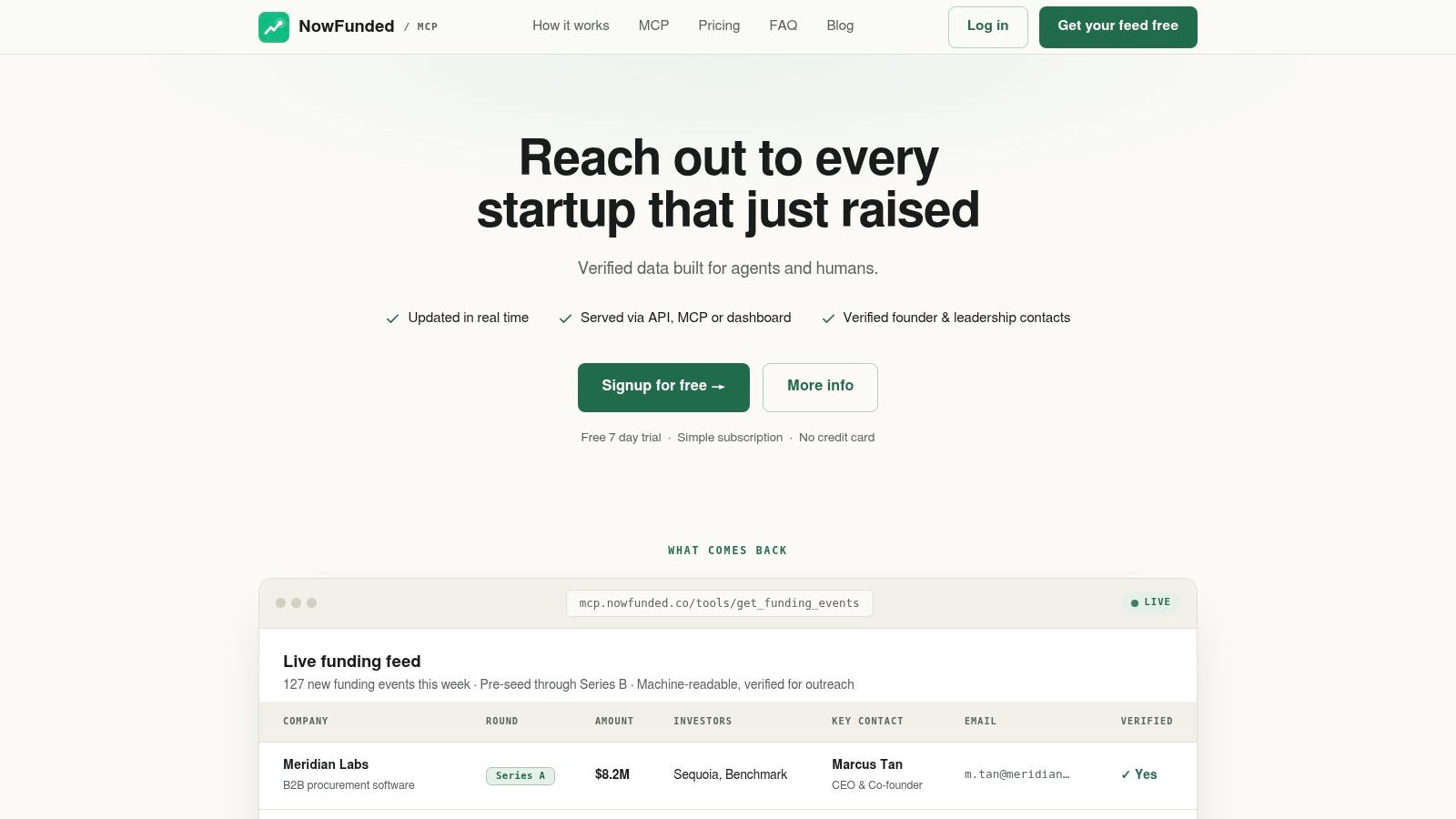
The operational advantage is delivery. NowFunded exposes the feed through MCP, REST API, webhooks, CSV export, and a web dashboard, and the records are structured with typed JSON schemas so agents and automations can consume them deterministically. The site also emphasizes real-time updates, 10,000+ historic records from the last 12 months, and 100+ new startups tracked weekly, which makes it useful for both immediate prospecting and lookback analysis.
Practical rule: use NowFunded when your SDR list should be built from a live event, not from a frozen export. That's the difference between first-touch timing and stale timing.
Pricing is also unusual in a good way for teams that hate opaque credit math. Funding-event data is free to query, and verified contacts are billed per pull at stated rates of $0.10 per email and $0.25 per phone, with no minimum spend or rate limits. That pricing structure favors teams that want to keep funding intelligence always on, while only paying for contacts when they're ready to use them. For teams that automate with Zapier, Make, or agent workflows, the directness of the feed is the point, not a bonus.
The trade-off is focus. NowFunded is built around early-stage raises, so if your motion depends on later-stage deal coverage or broad enterprise account mapping, it's not trying to be everything at once. For startup sales, recruiting, and market intel, that focus is the reason it works.
2. ZoomInfo SalesOS
ZoomInfo SalesOS makes sense when the workflow needs deep account context, not just names and emails. Its value sits in the combination of a large B2B database, direct dials, org charts, intent and event signals, and a broad integration ecosystem around CRM and RevOps tooling. If the rep's job is to map a territory, find the right stakeholder, and route the account into an established sales stack, ZoomInfo is built for that motion.
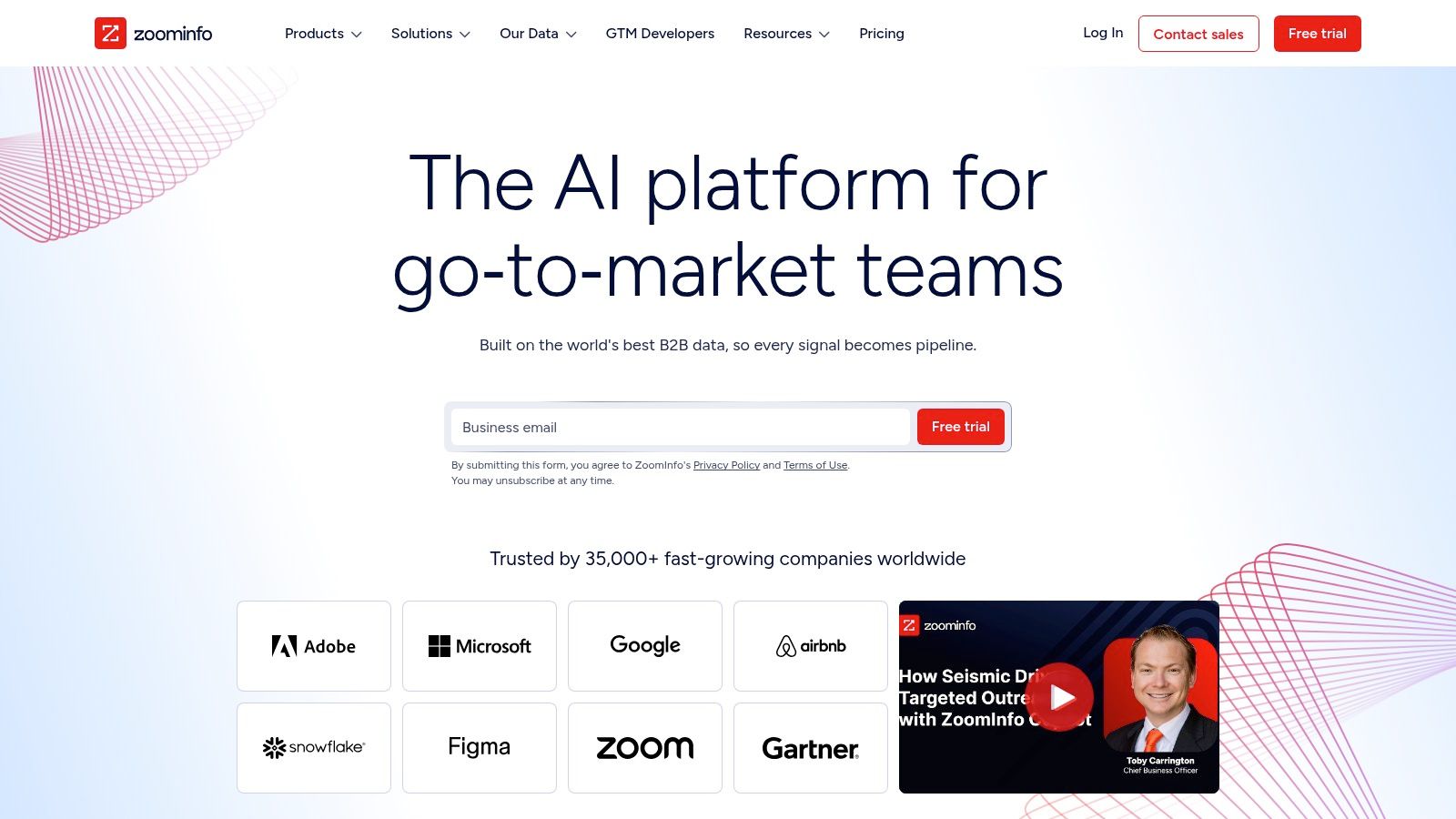
The strongest fit is often US mid-market and enterprise prospecting, where org complexity makes research expensive. The platform's Scoops-style signals and native integrations can reduce the manual work of figuring out who matters and when to reach them. That helps teams that already operate with structured territories, sales engagement sequences, and data governance rules.
A broad platform wins when the rep needs account intelligence inside the CRM, not a separate research ritual.
The trade-offs are straightforward. Pricing is quote-based, contracts are typically annual, and the credit and export structure can feel heavy if you only need a narrow set of contacts. That makes ZoomInfo a better economic fit for teams that will use the surrounding workflows, not just the database itself. If the sales motion is mostly founder-led outbound or lightweight SDR prospecting, the platform can be more than the team needs.
For RevOps leaders, that's the test. If the database needs to support routing, sequencing, enrichment, and reporting across multiple teams, ZoomInfo's depth can justify its complexity. If the team only wants a fast path to verified startup contacts, it may be solving a broader problem than the one you have.
3. Apollo.io
Apollo.io fits teams that want prospecting data and execution in one place. It combines a contact database with sequences, a dialer, intent filters, and CRM integrations, so SMB and mid-market SDR teams can keep list building, outreach, and logging inside one workflow.
NowFunded's blog is useful here for teams that want startup-targeting ideas tied to funding signals and outreach timing.
The main advantage is operational. Smaller teams often do not need a separate database, enrichment vendor, and sales engagement layer. Apollo's credit-based model also makes usage easier to plan than some enterprise tools, which matters for founders and lean SDR teams that need tighter spend control.
The trade-off is data consistency. Some teams still pair Apollo with a verifier or a second source because coverage can vary by segment, and broader targeting makes that more visible. That is not a defect so much as a reminder that bundled tools usually favor convenience first.
Apollo works best when one platform needs to do most of the job. It is less useful if you already run a mature engagement stack and only need a cleaner contact source. In that setup, the bundle can create overlap instead of reducing work.
4. Cognism
Cognism is the strongest fit when European coverage and compliance posture matter as much as list-building speed. The platform emphasizes GDPR/CCPA-aligned practices, a DPA, and phone-verified contact data, including mobile numbers. For teams that rely on cold calling and need confidence that their data handling matches the regions they sell into, that combination is hard to ignore.
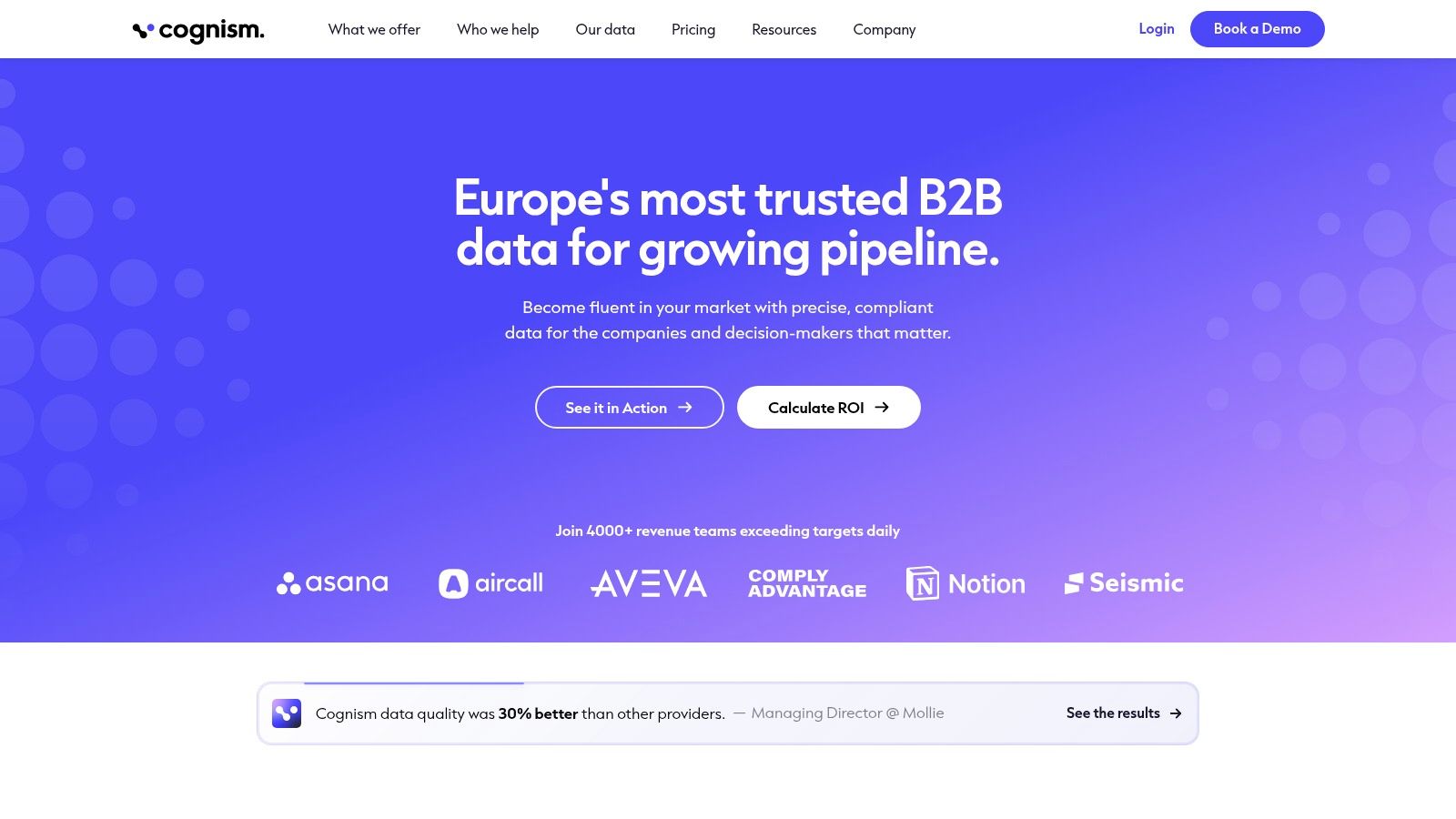
The practical benefit is mobile reach. If your outbound motion depends on dialing decision-makers, phone verification is more valuable than a larger but noisier list. Cognism also includes intent-style signals such as hiring, job changes, and funding events, which helps reps prioritize who to contact first rather than blasting an entire account list at once.
The trade-off is commercial structure. Pricing is quote-only, contracts are annual, and some deals include export or seat constraints that smaller teams may find restrictive. That makes Cognism a better fit for organizations that expect to use the compliance and verification posture at scale, not just sample it for a month.
Use Cognism when your risk profile is part of the buying decision. If legal, compliance, and call quality all matter, the database has to serve more than SDR convenience.
For Europe-heavy outbound teams, that can justify the spend. For a startup that mostly targets US founders, it may be too much platform for too little gain. The right question is not whether Cognism is good, it's whether your geography and dialing strategy make verification a core requirement.
5. Clearbit by HubSpot
Clearbit by HubSpot is best when prospecting data needs to live inside HubSpot-native routing and enrichment rather than a separate outbound database. Its strength is in visitor identification, IP intelligence, and broad firmographic and technographic enrichment that sales and marketing teams can use for routing, scoring, and audience building. If your CRM is already the source of truth, Clearbit helps keep it clean and more actionable.
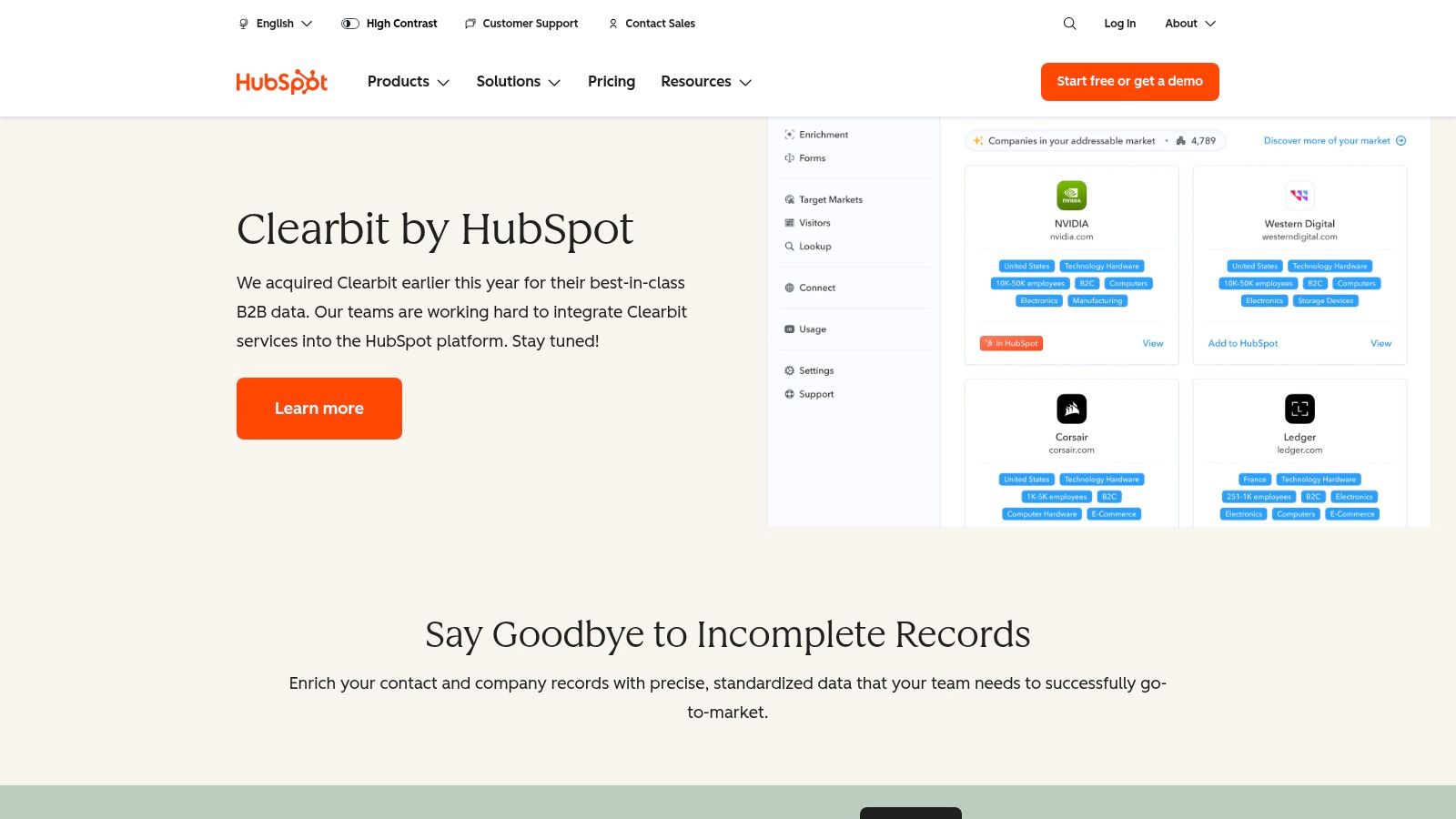
The better use case is not raw list creation, it's context. A rep can see what a visitor or inbound lead looks like at the company level, then route them to the right motion without a lot of manual lookup. That makes Clearbit especially useful for ABM teams and marketing ops groups that care about field-level overwrites, audience construction, and lead qualification.
The limitation is obvious. If your GTM stack doesn't center on HubSpot, Clearbit loses a lot of its appeal. Pricing isn't transparently listed, and teams sometimes report creep in the way usage expands once enrichment becomes embedded in several workflows. That's not unique to Clearbit, but it matters more when the tool is sitting close to your CRM and touching many records.
Clearbit is a classic integration-first choice. It doesn't need to be the richest standalone database if it's making the rest of the system smarter. For teams that already know where a lead should go, that can be more valuable than a separate database with a bigger headline number.
6. Lusha
Lusha is the cleanest option for teams that want to move quickly from LinkedIn or a company website to a usable contact record. Its browser extension is the core of the experience, and that makes it useful for reps who prospect manually and want low-friction access to verified emails and phone numbers. For SMB teams doing outbound by hand, that simplicity has real value.
The credit model is also easy to understand. A free plan gives teams a way to test the workflow before they commit, and the usage rules are transparent enough that managers can forecast how many pulls a rep is likely to burn through. That matters when the alternative is a system where usage is hard to explain until the invoice arrives.
The downside is depth. In some niches, Lusha won't match the breadth of the biggest enterprise databases, and phone numbers can consume credits quickly. That makes it stronger for lightweight prospecting than for heavy dialer operations at scale.
Lusha works best when the rep's job is to build a handful of accurate contacts fast, not to engineer a deep account map. If you need a quick list, a browser workflow, and a predictable credit scheme, it's a good fit. If you need enterprise-grade territory coverage or a large-scale enrichment engine, it may feel small on purpose.
7. Crunchbase
Crunchbase fits teams whose first question is which companies matter now, not which contacts to sequence. It gives funding histories, investor data, and firmographics on private companies, so it works well for startup target lists and for tracking fresh events that change account priority. That is a different workflow from contact acquisition.
As noted earlier, teams often pair this kind of discovery tool with a separate source for outreach data.
The main advantage is research speed. Saved searches, dynamic lists, alerts, and an AI research assistant help reps and analysts spot newly relevant accounts without checking every company by hand. For startup prospecting and market monitoring, that can be enough to keep a list current. It also sits below premium private-market terminals on cost if the goal is to see who raised, not to study ownership in detail.
The trade-off is contact depth. Crunchbase is not built as a contact database, so teams usually add enrichment elsewhere if they need direct outreach data. Export and plan limits can also matter once the account list gets large.
Crunchbase is a top-of-funnel tool. It answers, “Which companies should we care about?” It does not fully answer, “Who should we email first?” That makes it useful for research and account selection, less so for outbound execution unless the stack already includes verified contacts.
8. PitchBook
PitchBook belongs in the conversation when the team needs private-market depth, not just prospecting lists. It covers companies, deals, investors, valuations, and market maps with a level of curation that makes it useful for strategy, ABM planning, and competitive intelligence. If the buying motion requires a serious understanding of the private markets around an account, PitchBook is the heavyweight option.
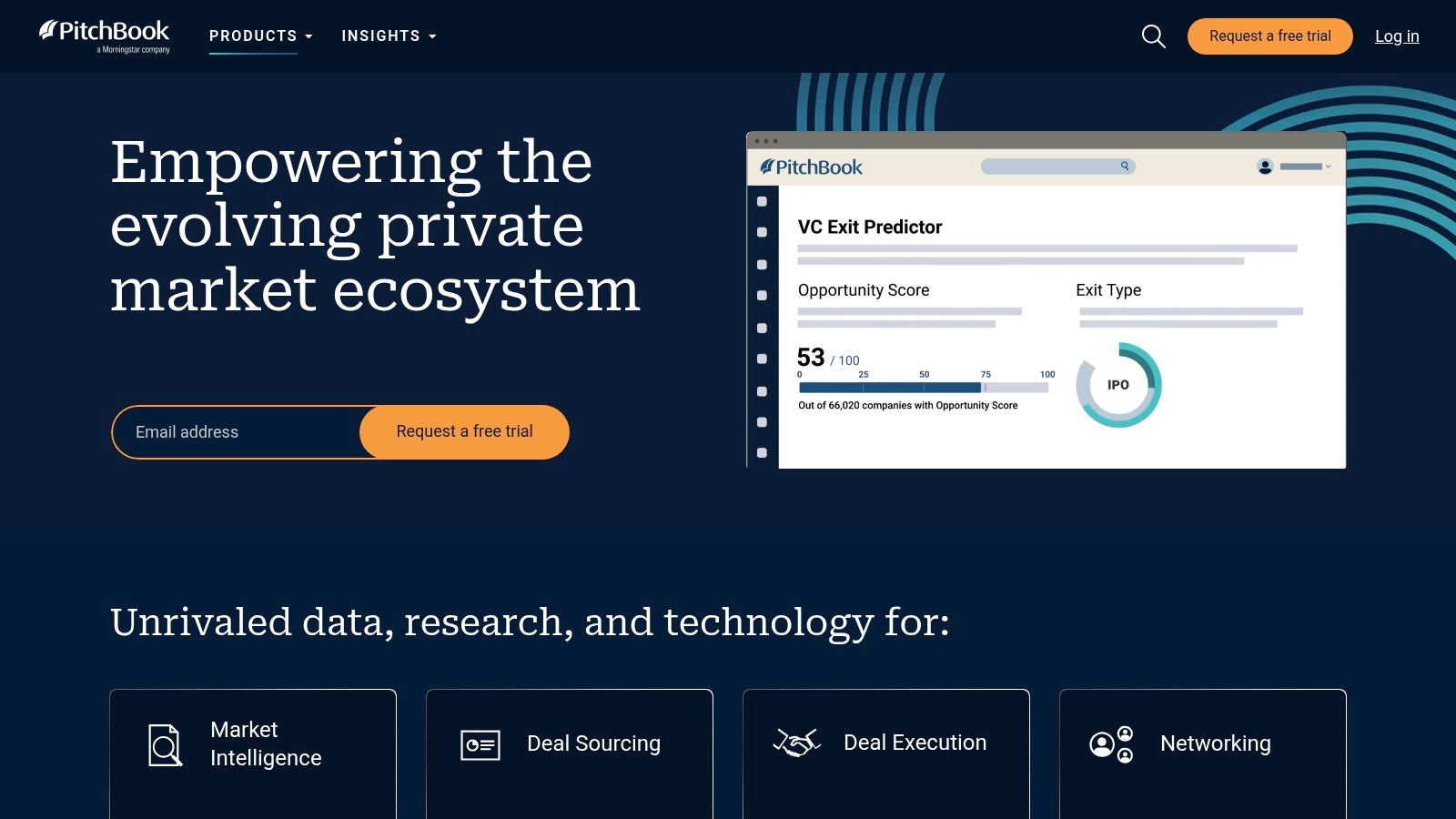
The upside is depth. Strategy teams can use the platform to map investors, compare deals, and understand the context around a target company in ways a lighter database won't support. That makes it useful when an account plan depends on ownership structure, peer benchmarking, or market positioning.
The downside is just as clear. PitchBook is expensive relative to sales-focused databases, pricing isn't public, and it's often overkill if the team only needs contact-level prospecting. In many organizations, it ends up paired with another contact source because the terminal is strongest at research, not outreach execution.
The best PitchBook use case is account intelligence feeding a broader motion. It's not the first stop for an SDR who just needs the next ten contacts.
For teams that want one tool to discover, verify, and execute outbound, it can feel heavy. For teams that need rigorous private-market context before they build a target list, that weight is the point.
9. People Data Labs
People Data Labs is the technical option for teams that want to build prospecting and enrichment into their own systems. It's API-first, with person, company, and IP datasets designed for engineering-led workflows, custom pipelines, and automation. If your team thinks in terms of productized enrichment rather than UI logins, PDL is built for that mode.
The advantage is control. Developers can wire enrichment into internal apps, agents, or data services without forcing reps into a separate interface. That makes it a strong fit for organizations that already have a CRM, warehouse, or internal prospecting layer and just need a reliable data substrate.
The trade-off is obvious too. PDL usually requires engineering time, and it's not the best fit for teams that want a plug-and-play browser workflow. Pricing also varies by volume and data type, so buyers need to understand their expected usage before they assume it will be simple.
Use PDL when data motion matters more than UI polish. If the team wants to automate enrichment, match records at scale, or feed prospecting into a custom system, it can be a smart infrastructure choice. If the team wants immediate SDR productivity with minimal setup, it can feel like more platform than product.
10. SalesIntel
SalesIntel is the right call for teams that prioritize accuracy over raw volume. Its emphasis on human-verified contacts, frequent re-verification, and distinct verification tiers makes it appealing when bounce reduction and list quality matter more than database size. The inclusion of Research-on-Demand is useful for hard-to-find contacts that automated systems miss.
That makes SalesIntel a practical fit for teams with strict outreach standards. If a rep needs a contact that's likely to work on the first try, the verification ladder is more important than a flashy total database count. The platform also offers API access, enrichment, and CRM or sales engagement integrations, so it can sit inside an existing workflow instead of replacing it.
The trade-off is breadth and cost. Coverage can be spottier in some industries, and the pricing usually sits at an enterprise level rather than a freemium entry point. That means the economics only work if the team values reliability enough to pay for it consistently.
SalesIntel is strongest when deliverability is a business requirement. If every bounce damages performance and every bad phone number wastes rep time, accuracy becomes the product. In that setting, a verified contact is worth more than a bigger but weaker list.
Top 10 Sales Prospecting Databases, Feature Comparison
Provider Core features Data & contact quality Delivery & integrations Target audience Pricing & value NowFunded Live funding feed (pre-seed–Series B), verified founder & leader contacts, typed JSON schemas Verified deliverable emails & phones, verification-first billing, real-time updates, 10k+ recent records MCP (native agent), REST API, webhooks (instant POST), CSV, dashboard SDR/outbound, recruiters, market-intel teams, AI-agent developers Free funding queries, contacts billed per pull (e.g., $0.10/email, $0.25/phone), usage-based, no min ZoomInfo (SalesOS) Large B2B company & contact DB, org charts, intent signals (Scoops) Strong US mid-market/enterprise coverage, rich direct-dial context Native CRM & engagement integrations, RevOps ecosystem Enterprise sales, RevOps, large teams Quote-based, often expensive, annual contracts Apollo.io Prospect database + sequences, dialer, intent filters Good SMB/mid-market coverage, data quality varies by segment Built-in outreach (sequences, dialer), CRM integrations, API SMB SDR teams, founders, growth teams Tiered plans with credits, approachable entry pricing Cognism GDPR/CCPA-aligned contact data, phone-verified mobiles, intent signals Strong EMEA coverage, reliable mobile reach, compliance posture API, integrations, DPA available EU sales teams, compliance-sensitive organizations Quote-only, annual contracts, can be pricier Clearbit (by HubSpot) HubSpot-native enrichment, visitor ID, 100+ attributes Good for HubSpot workflows, field-level overwrite rules HubSpot integration, batch enrichment, credit usage HubSpot-centered GTM, ABM, marketing teams Credit-based usage, pricing not fully transparent Lusha Chrome extension reveals emails/phones, simple credit model Verified emails & phones, shallower depth in some niches Browser extension, API, CRM integrations SMB teams, LinkedIn-based prospecting, quick list building Free plan with monthly credits, paid credits for scale Crunchbase Funding rounds, investor network, saved searches & alerts Strong funding & firmographic coverage, thinner contact data Web UI, alerts, AI research assistant, exports Startup prospecting, investors, researchers Cost-effective for startup discovery, plan limits on exports PitchBook Deep private-markets deals, valuations, investor profiles Gold-standard deal curation & depth, high-quality market maps Enterprise research terminal, curated datasets Strategy teams, PE/VC, enterprise research Expensive, enterprise pricing (not public) People Data Labs (PDL) API-first person & company enrichment, developer SDKs Developer-focused quality controls, suitable for scale automation APIs, SDKs, subscription/credit models, enterprise terms Engineering teams, automation & agent builders Credit/volume-based pricing, enterprise agreements SalesIntel Human-verified contacts, re-verification, Research-on-Demand High-accuracy aims, transparent verification tiers (human/machine) API, enrichment, CRM integrations, Research-on-Demand Teams prioritizing contact accuracy over volume Typically enterprise-priced, quote-based contractsChoose the Data Motion, Not Just the Database
The wrong way to buy a sales prospecting database is to ask which vendor has the most records. The right way is to ask what motion the team runs. If the motion starts with a fresh funding event and ends with outreach to founders or leadership, NowFunded is the clearest fit because it combines live early-stage signals, verified contacts, and delivery through MCP, API, or webhooks. If the motion is account-heavy and RevOps-led, broad platforms like ZoomInfo or HubSpot-native enrichment tools make more sense because they feed routing, scoring, and downstream automation.
If the job is market discovery, not direct contact, funding and private-market tools like Crunchbase or PitchBook are better starting points. If the CRM already owns the workflow, enrichment vendors such as Clearbit, People Data Labs, or SalesIntel can improve what's already there instead of forcing a second system of record. If the team wants a bundled outbound stack, Apollo and Lusha reduce setup friction, but they work best when simplicity matters more than deep specialization.
The practical test is the same across all ten tools. Run the same target segment through each shortlisted option, then compare freshness, verification outcomes, and how often the record is usable at the moment of outreach. Check whether credits, per-contact fees, export limits, API quotas, and webhook support will hold up once the team scales, because the cheapest-looking database often becomes the most expensive once maintenance and bad data start eating rep time.
For startup-focused outbound, the first question should be whether the signal is still alive when the rep touches it. That's where modern prospecting wins or loses. If you want to see a live funding feed paired with verified decision-maker contacts and delivery built for both operators and agents, visit NowFunded and compare it against your current workflow.