Outbound Prospecting Strategy: A 2026 Blueprint
Cold email reply rates average only 3.43% to 5.8%, so volume alone won't produce a dependable outbound pipeline. A targeted strategy built around timing, buyer context, channel selection, and verified data is the practical way to improve the odds.
That constraint matters most when you're selling to startups after a funding event. A newly funded company is not just another account that matches your industry and headcount filters. Its priorities may be changing quickly, executives are reallocating budget, new leaders are joining, and previously postponed projects can become urgent. The sales cycle may compress because the company has a reason to act now.
An effective outbound prospecting strategy therefore starts with a question more useful than “Who fits our ICP?” It asks, “Which companies have just entered a buying window, who owns the relevant decision, and what channel can reach them without wasting that window?”
Table of Contents
- The Realities of Cold Outreach at Scale
- Segmenting Buyers by Life Stage and Trigger
- Designing the Channel Mix for Startup Outreach
- Building Sequences That Respect Urgency
- Integrating Data Feeds and Automation APIs
- Troubleshooting Deliverability and Inbox Health
The Realities of Cold Outreach at Scale
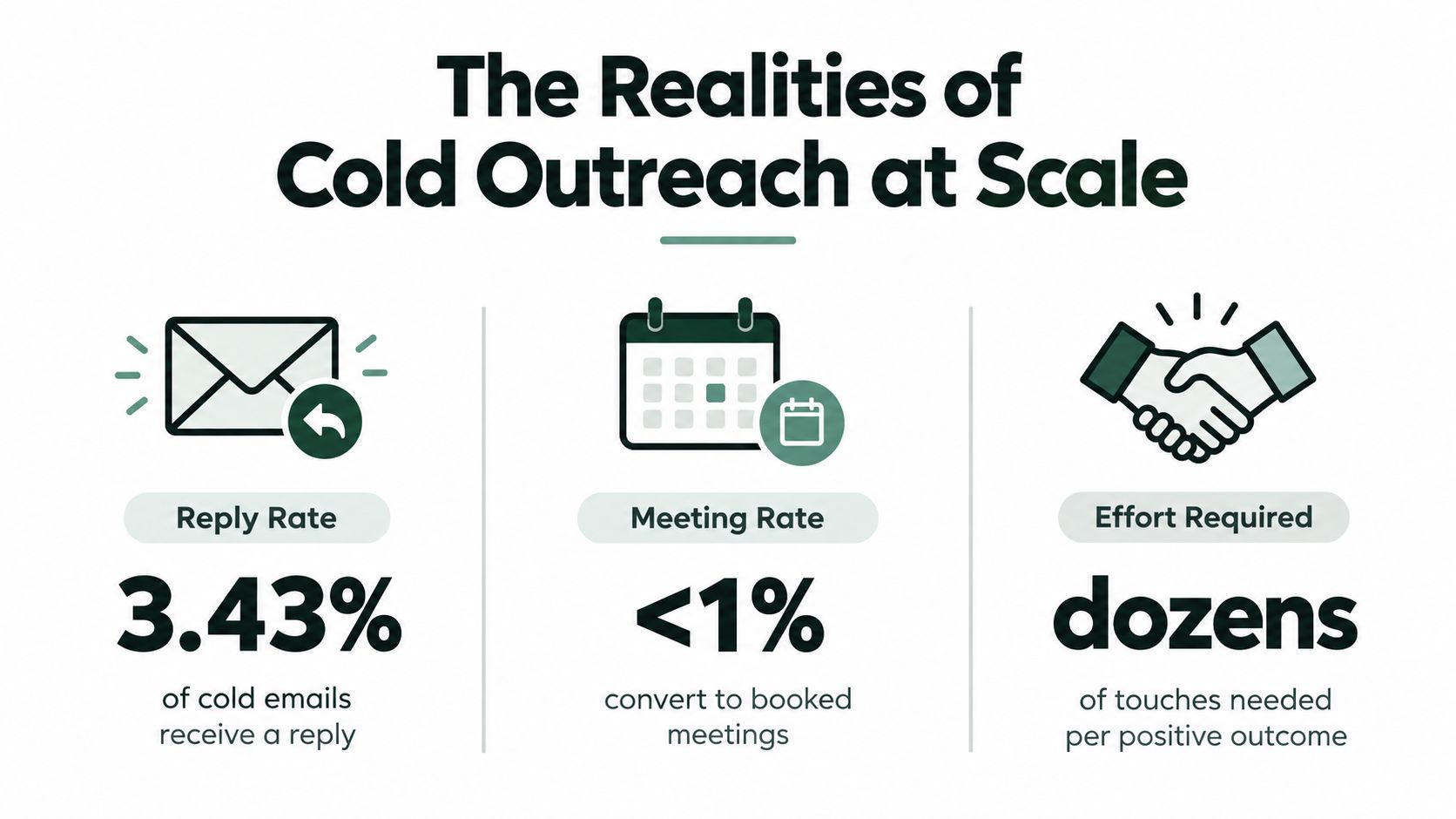
Outbound prospecting is inefficient by default. A recent aggregate benchmark puts average cold email reply rates at 3.43%, while another benchmark cited 5.8% on 16.5 million emails in 2024, as summarized by Cleverly's cold email response rate analysis. Even the more optimistic figure means most messages receive no reply.
That isn't a reason to abandon outbound. It's a design constraint. If the base rate is low, sending more generic messages mostly increases the amount of work required to produce the same small number of conversations. Your advantage comes from improving the conditions around each contact, especially account selection, timing, relevance, and follow-up discipline.
Volume is not a strategy
Generic outbound usually fails in predictable ways. The list contains companies that technically fit the market but have no immediate reason to evaluate a solution. The message describes the seller's product instead of connecting to a current business event. The sequence stops after one attempt, or continues with repetitive nudges that add no new context.
A newly funded startup changes the starting conditions. The funding event is a public signal that the company has secured resources and may be preparing to invest in hiring, infrastructure, distribution, compliance, or operational systems. It doesn't prove that the company needs your product, but it gives you a reason to investigate now rather than treating the account as permanently cold.
Practical rule: Treat a low reply rate as a reason to narrow the list, not as permission to send more messages.
Relevance has to be engineered
Funding alone isn't enough. You still need to check the company's product, market, location, hiring activity, leadership structure, and likely use case. A funding-triggered account should enter a specific play, not a universal sequence.
That play might connect the round to a role-specific problem. A founder may care about execution speed and hiring capacity. A newly appointed operations leader may care about systems and process. A revenue leader may be focused on building pipeline before the team expands. Your message should reflect the buyer's responsibility and the company's current stage.
A live source such as the NowFunded startup research feed can support this type of account discovery, but the feed is only the beginning. The core work is converting a funding signal into a defensible reason to contact a particular person through a particular channel.
Segmenting Buyers by Life Stage and Trigger
A static lead list treats every account as if it has the same probability of buying. That's rarely true. A startup that has just closed a round operates under different constraints from a mature enterprise, even when both match your industry and employee filters.
Start with two layers of segmentation. The first describes the company. The second describes why the company might be reachable now.

Build the account layer first
Define the firmographic boundaries that determine whether an account belongs in your outbound program:
- Market and use case: Identify the segment where your product solves a recognized problem, not merely the segment where you can find contacts.
- Company stage: Separate newly funded startups from later-stage businesses because their budgets, processes, and decision paths differ.
- Location and operating model: Account for regional coverage, time zones, hiring markets, and whether the company operates remotely or from a defined headquarters.
- Team structure: Look for the functions that would own the problem, including founders, revenue leaders, operations executives, technical leaders, or people leaders.
- Exclusions: Remove companies with no relevant role, an incompatible business model, or a problem your product can't credibly address.
The funding round gives you a timing input, not a qualification verdict. A round can support expansion, product development, market entry, or a longer runway. Your research has to determine which of those possibilities relates to your offer.
Rank the trigger layer
Rank accounts by the strength and freshness of the event. A verified new round should usually sit above an old funding announcement, but the message still needs supporting context. A leadership hire can matter more than the round if that leader owns the function you serve. Hiring activity, a product launch, a new market, or a clear operational change can sharpen the reason to reach out.
Use a simple priority model:
- Event relevance: Does the trigger connect directly to the problem you solve?
- Role relevance: Can you identify the person who owns the likely outcome?
- Timing: Is the event recent enough that priorities may still be forming?
- Evidence quality: Can you verify the company, event, role, and contact details?
- Message angle: Can you explain why the event makes your conversation useful?
Keep the segment small enough for real research. A narrow group of highly relevant accounts gives you more room to adapt language, choose channels, and notice patterns in replies. A broad list makes it harder to distinguish a bad offer from bad targeting.
The key operational shift is from “funded startups” to “funded startups with a relevant trigger, owner, and next action.” That definition creates a list your team can work.
Designing the Channel Mix for Startup Outreach
Early-stage founders often move between fundraising, hiring, product decisions, customer conversations, and investor updates. Reaching them requires a channel mix that balances speed with context.
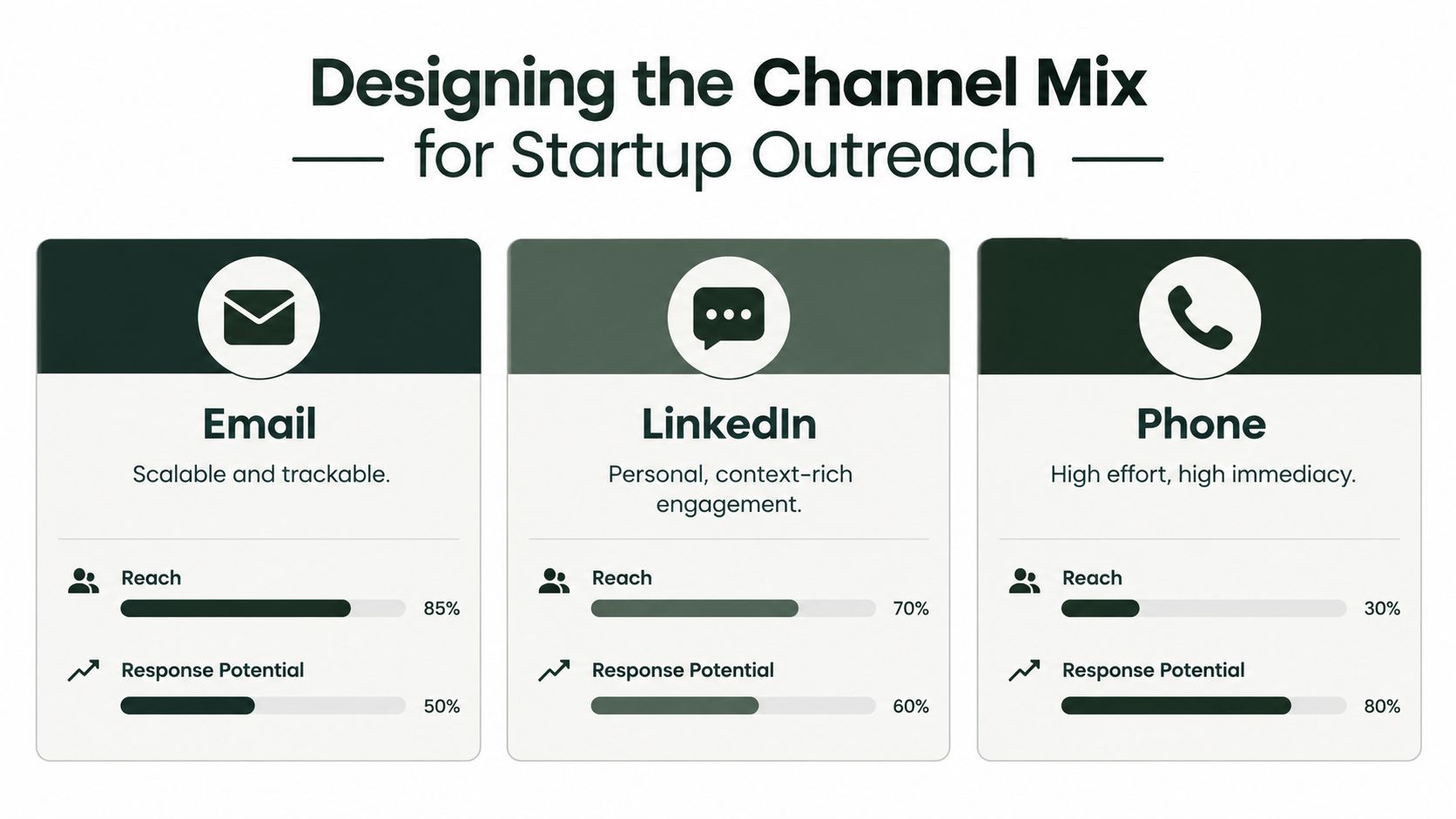
Email gives you scalable, trackable communication. LinkedIn provides a visible professional context and a lighter way to establish familiarity. Phone offers immediacy, but it demands stronger timing and a credible reason for interrupting someone. A 2025 sales channel survey found that 36% of sellers named LinkedIn as the most effective cold-outreach response driver, while fewer than half still relied on cold calling and only 1 in 6 rated it as their top response driver, according to the 2025 Sales Channel Report.
Choose the first channel by context
Email-first works when you have a strong trigger and a concise business hypothesis. It lets you explain why you're reaching out and gives the founder a low-friction way to respond. It fails when the message is generic, the address is unverified, or the sender expects an immediate answer.
LinkedIn-first works when the prospect is active there or when the event is naturally visible in their profile and network. A thoughtful connection or comment can create recognition before an email arrives. It becomes inefficient when the team treats social activity as a substitute for a clear offer or sends the same scripted message through another inbox.
Phone-first can work for a high-priority account where the trigger is urgent and the caller can explain the relevance quickly. It carries a higher interruption cost, particularly for founders who screen unknown numbers. A call should validate interest or timing, not force a full product pitch.
Use a hybrid sequence
For a newly funded company, a practical mix might begin with a researched email, followed by a contextual LinkedIn interaction, then a call reserved for the accounts with the strongest fit. The order can change by persona. A founder who posts regularly may be more approachable on LinkedIn, while an operations leader may respond better to a direct email with a clear process problem.
Keep one narrative across channels. Don't send an email about hiring, a LinkedIn note about revenue, and a call about infrastructure. Each touch should reinforce the same account-specific hypothesis while adding a different form of access or evidence.
A channel mix should also reflect team capacity. If reps can't monitor LinkedIn or make useful calls, adding channels creates superficial activity rather than better coverage. Start with the channels your team can execute well, then adjust based on qualified replies and meetings, not impressions.
For teams that need a live source of funding events and relevant contacts, NowFunded is one option to evaluate alongside a CRM, sequencing platform, and contact verification workflow.
Building Sequences That Respect Urgency
Post-funding outreach needs persistence, but urgency doesn't justify pressure. Founders may be moving quickly, yet they're also handling a crowded set of decisions. The sequence should make each contact useful on its own, with a clear reason for the next touch.
The evidence supports a structured approach. One benchmark reported that it now takes an average of 4.81 touches to get a response, and another study summarized by Outreach's cold calling and emailing benchmark found that sequences with 4 to 7 messages produced about a 27% reply rate, compared with 9% for sequences with 1 to 3 messages. Longer sequences can also increase unsubscribes and spam complaints, so persistence has to remain relevant.
Give every touch a job
A useful cadence might contain these stages:
- Context: Reference the verified funding event and connect it to a specific operating priority. Don't pretend the round proves the prospect needs your product.
- Role relevance: Explain why the message is appropriate for that person's responsibilities. Founders, functional leaders, and new hires shouldn't receive identical framing.
- Useful insight: Offer a concise observation, diagnostic question, or relevant point of view. The prospect should learn something even if they don't reply.
- Channel reinforcement: Use LinkedIn or a call to make the account familiar, not to repeat the same paragraph in another medium.
- Specific proof: Share a relevant capability or example only when it maps to the account's situation. Avoid unsupported case-study claims.
- Low-friction ask: Ask whether the issue is relevant, whether someone else owns it, or whether the timing is wrong. A small reply is easier than an immediate meeting commitment.
- Clear close: End the active sequence respectfully and state what would make a future conversation timely.
Space the touches according to the trigger's urgency and the buyer's likely workload. A newly verified round may justify faster initial coverage, while a less immediate hiring signal can support a slower pace. Don't use a rigid calendar that ignores replies, job changes, public announcements, or signs that the account has paused hiring.
A sequence should feel like a developing argument, not the same request repeated seven times.
Track response quality at each stage. A positive reply from the wrong person isn't equivalent to a qualified conversation, and an open or profile view doesn't prove buying interest. Use those signals to refine the next touch, but don't treat them as permission to increase pressure.
The strongest follow-up is often a new reason to respond. If you can't add context, ask a sharper question, or acknowledge a change, stopping may protect the relationship better than sending another reminder.
Integrating Data Feeds and Automation APIs
Manual research breaks down when the team has to discover a funding event, confirm the company, find the right leader, verify contact details, update the CRM, and launch a sequence before the signal goes stale. The problem isn't just rep productivity. It's data consistency. Different reps will record different fields, interpret events differently, and contact different people.
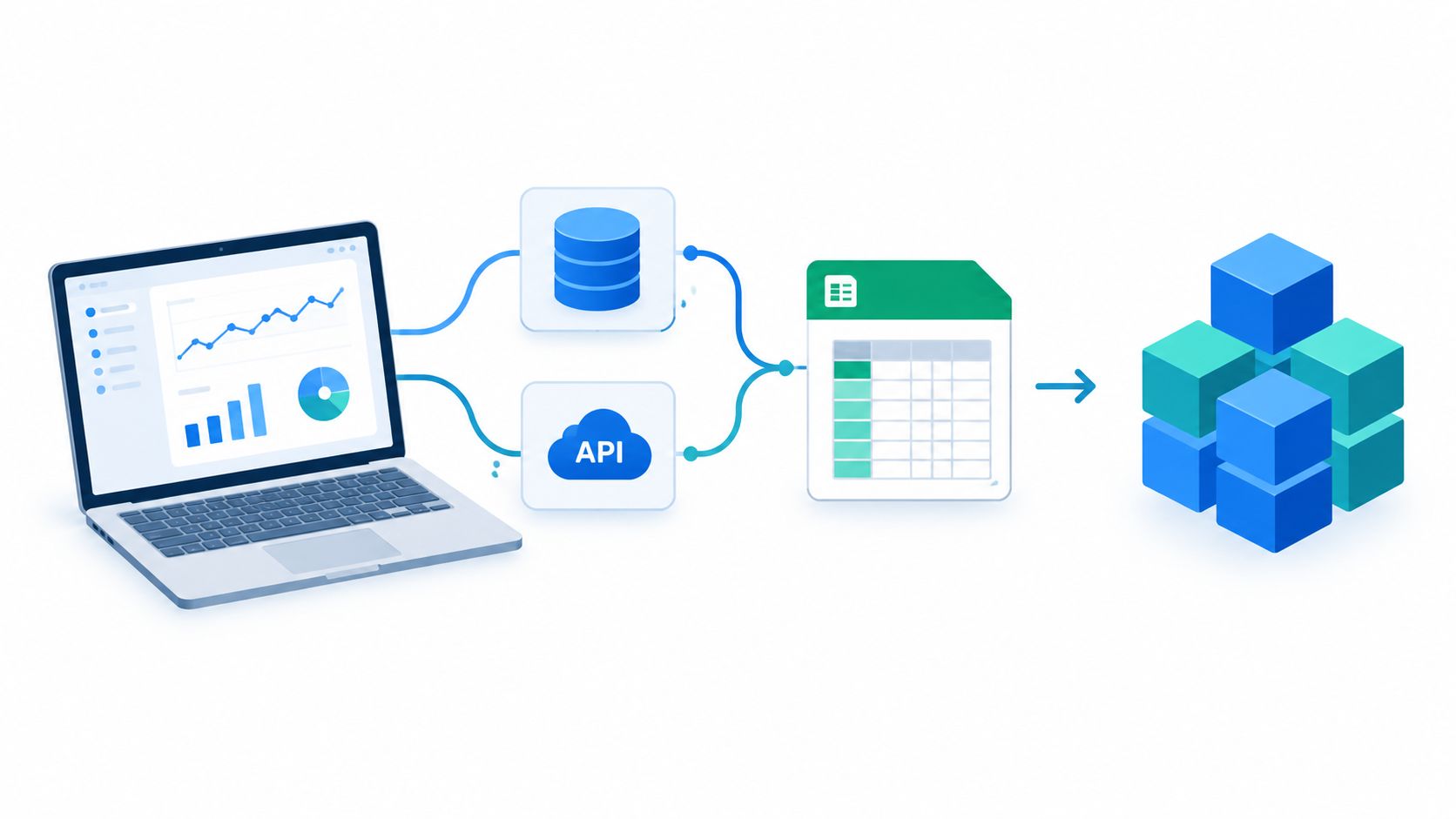
A reliable workflow separates event detection, enrichment, qualification, and activation. Each stage should produce structured data that the next stage can consume.
Design the workflow around the event
A practical architecture looks like this:
- Detect: Poll a funding data source or receive a webhook when a new round is verified.
- Normalize: Store the company name, website, location, round, investors, industry, and event date in consistent fields.
- Enrich: Identify founders and relevant leaders, then request contact details with a clear verification status.
- Qualify: Apply ICP rules, exclude unsuitable accounts, and assign a priority based on trigger relevance.
- Route: Create or update the account in the CRM and place the contact in the correct segment.
- Activate: Send the account to a sequencing tool only after a human or rule-based review confirms the message angle.
- Measure: Record replies, qualification outcomes, meetings, and disqualification reasons against the original trigger.
Push-based delivery is useful when timing matters. A webhook can notify your system as soon as an event is verified, while an MCP endpoint or REST API can support on-demand research and agent-driven enrichment. CSV export remains useful for review and controlled batch operations, but it shouldn't become the only system of record.
Keep automation subordinate to judgment
Automation should accelerate evidence gathering, not manufacture relevance. A model can summarize a funding event or suggest likely stakeholders, but your workflow should preserve the source fields that support those conclusions. That makes it easier for a rep to check whether the proposed message is accurate before sending it.
Use explicit states such as new_event, enrichment_pending, qualified, human_review, sequenced, and suppressed. These states prevent duplicate outreach and show where records are getting stuck. They also make it possible to stop a sequence when a prospect replies, changes roles, asks not to be contacted, or no longer fits the campaign.
The same discipline applies to contact pulls. Request founder or leadership contacts when the role is relevant, verify deliverability before activation, and avoid enriching every person at an account only because the data is available. Data volume doesn't equal account insight.
Automation earns its place when it shortens the path from verified signal to accurate action.
Your CRM should retain the trigger and the reasoning behind the segment. Without that context, reps see a contact record but not the event that made the account worth pursuing. That omission leads to generic follow-up and makes later analysis unreliable.
Troubleshooting Deliverability and Inbox Health
A strong message produces no reply if it misses the inbox. List quality, sender reputation, and sending controls often create the bottleneck before copy becomes the issue. Recent outbound guidance recommends verified lists, limiting outreach to 1 to 2 contacts per account, and using 8 to 12 touch multichannel cadences over 15 to 20 business days, as described in SalesHive's 2025 outbound best-practices guide.
Start with the record, not the subject line. Verify that the company exists, the recipient still holds the role, the address belongs to that person, and another rep has not already contacted the account. Post-funding startups often attract several vendors at once. Duplicate outreach can damage the experience even when each individual message appears reasonable.
Separate delivery problems from message problems
Use this checklist:
- Contact validity: Remove failed addresses and generic inboxes unless the role normally uses one.
- Role accuracy: Match the message to the recipient's current responsibilities and seniority.
- Account coordination: Set a limit on active contacts per account and suppress duplicates across campaigns.
- Domain protection: Review bounce, unsubscribe, complaint, and reply patterns before raising volume.
- Sequence control: Pause outreach after a reply, opt-out, strategic change, or clear disinterest.
- Timing discipline: Send during the recipient's working hours and local time zone.
- Message variation: Make each follow-up materially different instead of changing only the subject line.
A reply rate alone can mislead. An unqualified contact may respond while the campaign creates no pipeline. Track qualified replies, meetings created, disqualification reasons, and downstream progression by segment and trigger. That view matters particularly for newly funded accounts, where urgency can make timing look successful before the opportunity is genuinely qualified.
Set modest expectations for cold email. The same SalesHive coverage places average reply rates around 3% to 5.8% and describes a typical funnel of approximately 40% opens, 3% replies, 2% positive interest, and 1% meetings per 100 delivered emails. Treat those figures as directional benchmarks, not promises, and do not use open rates as a proxy for buying intent, as noted in the same SalesHive benchmark discussion.
After a weak campaign, ask whether the right, verified person received a relevant message at a credible moment. If not, rewriting the copy will not repair the system.
NowFunded provides a live, verified feed of newly funded startups, structured company and round data, and verified founder and leadership contacts through MCP, REST API, webhooks, CSV export, or a web dashboard. Use NowFunded to connect funding-trigger discovery with a timely, data-supported outbound prospecting workflow.